Get Full Government Meeting Transcripts, Videos, & Alerts Forever!
Get email alerts on the Dna Backlog topic
No spam. Unsubscribe anytime.
SFPD: new victim-notification card, ordered pickups and vendor help have 'virtually eliminated' DNA backlog
Summary
Captain Donna Meixner told commissioners the lab now has "virtually no backlog," citing a new victim 'bill of rights' card, revised pickup orders (72-hour hospital collection), prioritization of stranger-suspect (ASAP) cases typically begun within 24 hours, and a SharePoint tracking spreadsheet.
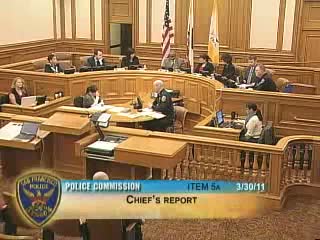
Captain Donna Meixner, head of the SFPD forensic services division, told the Police Commission on March 30 that the department has implemented multiple protocols intended to eliminate the DNA testing backlog and comply with recently enacted local requirements.
'Since I last addressed this commission last year, we have implemented several protocols to virtually eliminate any backlogs in our DNA testing,' Meixner said. She described auditing the vendor laboratory used for overflow work, drafting technical specifications for vendor work, and sending overflow cases to the vendor when in-house analysts are at capacity.
Meixner said analysts were working roughly 101 cases in-house and the vendor lab had 123 overflow cases. The department has hired or is hiring additional DNA analysts and supervisors; Meixner cautioned hiring will not be an immediate fix because candidates need background checks and training.
Meixner outlined four implementation steps tied to a recent Board ordinance discussed at the meeting. First, the department produced a victim 'bill of rights' card (SFPD form referenced in the presentation) to inform sexual-assault victims when a DNA profile is developed, whether it was entered into CODIS (Combined DNA Index System), and whether a match resulted. Second, unit orders and a department bulletin will require evidence from hospitals to be picked up within 72 hours (Monday, Wednesday and Friday checks); Meixner said the bulletin would be issued the next day. Third, the department established a 14-day goal to get evidence tested; triaging directs ASAP (stranger-suspect) cases out immediately and these are typically worked within 24 hours by in-house analysts. Fourth, cases and steps are being tracked in a Microsoft SharePoint spreadsheet that records collection date, booking, lab delivery, analyst start date, results, and CODIS activity.
Commissioners pressed for documentation, timeline proofs and monitoring. Commissioner Hammond said the Board had passed an ordinance (identified in the meeting as an administrative-code requirement) and asked whether the department had produced materials in response. Meixner said she had the documents available that evening and a draft department bulletin that would be finalized and issued shortly.
On backlogged cases that are still routed to a vendor, Meixner said administrative steps (quotes, purchase orders, property transfers) currently add about a week before the vendor work begins. She also said the department intends to keep homicides and sexual assaults in-house where possible and send gun, robbery and some burglary cases to the vendor when necessary.
Commissioners requested distribution of redacted SharePoint tracking data and asked for a six-month follow-up to measure whether the victim notification card and new pickup protocols increase cooperation by victims. Meixner agreed to provide the requested materials and to work with the assault-unit inspectors on follow-up reporting.
Ending: The commission asked for continued monitoring and receipt of redacted tracking data; Meixner agreed to return with follow-up information and to supply the commission with documentation of the new processes.