Get Full Government Meeting Transcripts, Videos, & Alerts Forever!
Get email alerts on the Mental Health Cit topic
No spam. Unsubscribe anytime.
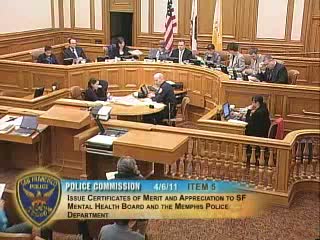
Police Commission outlines timeline to launch Crisis Intervention Team after Memphis visit
Summary
The commission received a report on Crisis Intervention Team (CIT) work after a delegation to Memphis; commissioners approved a phased timeline to pilot CIT officers starting in June and seek citywide coverage by December, with training, data collection and community partnerships emphasized.
The San Francisco Police Commission received a detailed report on April 6 about a plan to roll out a Crisis Intervention Team (CIT) program modeled in part on Memphis's program, with an initial pilot slated for this summer and a broader rollout targeted by December.
Commissioner Angela Chan summarized a three‑phase plan: planning and curriculum design through May, pilot training and deployment for a first cohort in June, and expanded trainings and district rollouts from September through December. Captain Goldberg, the department's CIT coordinator, said the working group includes roughly 30 members from mental‑health providers, advocacy organizations and police‑training staff; the group is developing training, recruitment materials and data‑collection plans.
Delegation members described their visits to Memphis. Pamela Fisher of NAMI and Cecile O'Connor of the Progress Foundation described Memphis’s integrated community role in training and monthly recognition of CIT officers. Director Joyce Hicks and Captain Goldberg described curriculum priorities — de‑escalation, complex crisis intervention and trauma/PTSD modules — and said program materials will be tailored to San Francisco’s local resources and language needs.
Dr. Eric Woodard, medical director of Psychiatric Emergency Services at San Francisco General, told commissioners PES handles roughly 400–700 psychiatric emergency patients monthly (about 7,000 a year) and that 80–85% have comorbid substance‑use disorders. Working‑group members said Memphis data show lower recidivism for individuals diverted to services rather than jail, and the commission asked the working group to prioritize data that measures outcomes and cost impacts.
Captain Goldberg outlined the summer pilot: train 25 volunteer officers, deploy them within three pilot stations (candidates include Mission, Southern and the Tenderloin), evaluate the pilot after a month, refine training, and continue monthly cohorts through August. The working group aims to conduct eight trainings (25–28 officers each) so that a substantial portion of patrol has CIT training by year‑end. Commissioners praised the pace of the effort and asked staff to return with performance measures at future updates.
The commission scheduled regular two‑month updates from the CIT working group and emphasized that CIT is a community program requiring partnerships across public health, advocacy groups and SFPD.