Get Full Government Meeting Transcripts, Videos, & Alerts Forever!
Get email alerts on the Finance Commercial Paper topic
No spam. Unsubscribe anytime.
SFPUC approves doubling water commercial paper program to $500 million
Summary
The San Francisco Public Utilities Commission voted to authorize the general manager to expand the water enterprise commercial paper program from $250 million to $500 million to help finance Water System Improvement Program (WESIP) projects, citing lower short‑term borrowing costs versus issuing long bonds.
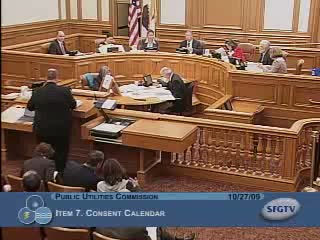
The San Francisco Public Utilities Commission on Oct. 27 approved authorizing the general manager to execute documents expanding the water enterprise commercial paper program from $250 million to $500 million to help fund capital needs for the Water System Improvement Program.
Todd Reistrom, Chief Financial Officer and Assistant General Manager, told commissioners the expansion is intended to support a heavy near‑term capital pipeline and take advantage of lower short‑term borrowing costs. "We've benefited and the ratepayers have benefited dramatically from the low cost borrowing of commercial paper," Reistrom said during his presentation. He explained the syndicate structure under the RFP process, with JPMorgan as lead and U.S. Bank taking a significant portion of the facility.
Commissioners asked why part of the program must be taxable. Reistrom explained that because roughly 15% of water sales go to private, for‑profit entities (for example, Cal Water and some institutional customers), IRS rules require a portion of debt used to finance projects benefiting private users be issued as taxable debt. "So for us it's going to mean about $100,000,000 on a total of $4.6 billion," Reistrom said, describing the tax‑treatment calculation.
Reistrom also summarized key commercial terms: a one‑year term for the facility to avoid locking in high longer‑term fees, liquidity and dealer agreements, and syndication and bank holding costs. He said the structure is authorized under Proposition E and that staff and outside counsel (Sidley Austin and the City Attorney's Office) reviewed the documents.
The commission took public and commissioner questions about market participation, timing relative to other debt issuances and the relative cost advantages of commercial paper compared with upsizing long‑term bond sales. After discussion, commissioners voted in favor of approving the documentation to expand the commercial paper program.
The action authorizes staff to finalize revolving‑credit and dealer agreements and execute issuing and paying agent agreements necessary to implement the expanded commercial paper facility. The commission recorded the vote and closed discussion on the item.