Get Full Government Meeting Transcripts, Videos, & Alerts Forever!
Get email alerts on the Bay Division Pipeline topic
No spam. Unsubscribe anytime.
Commission approves Bay Division pipeline reliability upgrades, including five‑mile tunnel
Summary
The SFPUC authorized CEQA findings and implementation actions for Bay Division pipeline reliability upgrades: a Fremont–Newark pipeline, a five‑mile tunnel under the bay and a Menlo Park–Redwood City pipeline. The project targets seismic lifeline capability and reservoir replenishment and includes mitigation for aesthetic and noise impacts.
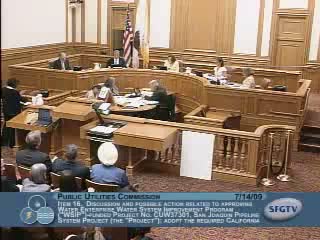
The San Francisco Public Utilities Commission voted July 14 to adopt CEQA findings and authorize implementation steps for the Bay Division pipeline reliability upgrade projects, which include three contracts: an East Bay pipeline from Fremont to Newark, a roughly five‑mile tunnel under San Francisco Bay, and a Peninsula pipeline from Menlo Park to Redwood City.
Johanna Wong, regional project manager for the Bay Division, told commissioners the three‑part project is designed to create a seismic lifeline so the system can supply water to customers within 24 hours after a major earthquake, help replenish Peninsula reservoirs and meet routine demand when other facilities are out of service. The central tunnel is approximately five miles long with an internal diameter of about 9 feet; the East Bay pipeline portion is roughly seven miles and six feet in diameter, and the Peninsula portion is about nine miles and five feet in diameter.
Wong described environmental mitigation measures: tunnel alignment adjustments to avoid salt marsh and bay habitat, staging area configurations to minimize wetland impacts, noise barriers and restricted construction hours, and reuse of an estimated 90% of tunnel spoils for salt‑pond restoration where feasible. Commissioners asked about the fate of the existing trestle pipelines; staff said EIR variants address keeping the pipelines available for warranty inspections or maintaining them in place and that a future decision about decommissioning would come in about 2016–2017. Staff also said approximately 200 trees could be impacted; replacement plantings of roughly 3:1 to 5:1 were discussed.
After discussion and public acknowledgement of the project’s importance for seismic safety, a motion to approve the item was moved and seconded; the commission approved the item unanimously.