Get Full Government Meeting Transcripts, Videos, & Alerts Forever!
Get email alerts on the San Joaquin Pipeline topic
No spam. Unsubscribe anytime.
SFPUC adopts EIR and CEQA findings for San Joaquin Pipeline System Project
Summary
The SFPUC adopted the project EIR, CEQA findings (including statement of overriding considerations), and a mitigation monitoring program for the San Joaquin Pipeline System Project, authorizing pre‑construction work. The project will add capacity and crossovers to improve maintenance and reduce discharge impacts.
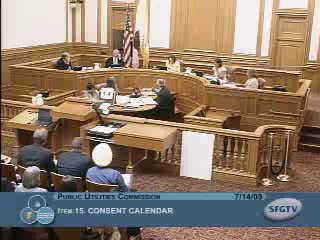
The San Francisco Public Utilities Commission on July 14 certified the final environmental impact report and adopted CEQA findings, including a statement of overriding considerations and a mitigation monitoring and reporting program for the San Joaquin Pipeline System Project.
Chris Nelson, project manager with the SFPUC infrastructure division, told commissioners the project would add a 78‑inch, 11‑mile pipeline segment and crossovers that increase flow capacity from the Sierra to a minimum of 313,000,000 gallons per day (with all pipelines running). The work is intended to improve the ability to isolate segments for maintenance and to reduce the volume of water discharged during pipeline work. Nelson described a program variant that would bypass an eastern segment composed of prestressed concrete cylinder pipe (PCCP) and noted environmental benefits for nearby refuge areas through managed discharge and design enhancements arising from the environmental review.
Staff and the environmental team identified several program‑level unavoidable impacts already in the WSIP program EIR: impacts to Crystal Springs reservoir downstream fisheries, Alameda Creek and downstream fisheries below Calaveras Dam, and potential growth inducement. Nelson said mitigation measures and a 34‑page mitigation monitoring and reporting program would be incorporated into construction contracts and permit processes. He also listed required permits and interagency coordination with the U.S. Army Corps of Engineers, U.S. Fish and Wildlife Service, National Marine Fisheries Service, Caltrans, State Historic Preservation Officer and regional water quality boards.
Commissioners asked whether property acquisitions had begun; staff said offers were not appropriate until CEQA findings were adopted but appraisal notices had been provided as a prelude. After questions about the program’s scope, potential impacts and schedule, Commissioner (speaker 5) moved to approve the item; the motion was seconded and carried unanimously.
The adopted actions authorize staff to undertake property‑related processes (temporary and permanent easements), enter required interagency agreements, seek necessary permits, and proceed with preconstruction activities needed before returning to the commission for authorization of construction contracts.