Get Full Government Meeting Transcripts, Videos, & Alerts Forever!
Get email alerts on the Public Participation topic
No spam. Unsubscribe anytime.
Public commenters press for more openness; commission debates and agrees to practice change on public‑comment handling
Summary
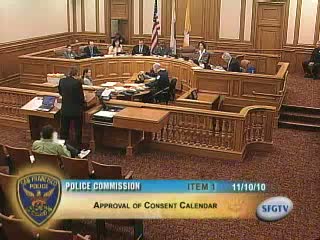
Public commenters at the Nov. 10 meeting raised specific allegations about stops and general critiques of OCC and meeting procedures. Commissioners debated proposed preambles to public comment and agreed—by practice, not formal rule—to read an explanatory statement and to coordinate scheduling items nearer public comment.
A series of public commenters used the commission’s general‑comment period to raise complaints about police stops, oversight outcomes and meeting procedures. Brent Thorne described an encounter with a plainclothes officer he identified as "Star883," saying he was handcuffed near Alamo Square and later contacted the OCC. Ray Hartz of San Francisco Open Government repeatedly criticized the oversight process and the commission’s handling of public comment, citing examples where he said speakers were interrupted.
In response, commissioners introduced Item 5, a review of the commission’s rules of order concerning public comment. Commissioners Kingsley and Slaughter presented draft language to clarify when commissioners may respond to members of the public and proposed moving scheduling of future‑action items closer to the start of public comment so that follow‑up can be more timely.
The city attorney advised caution about Brown Act and Sunshine Ordinance issues if commissioners engage in back‑and‑forth discussion immediately after public comment on unagendized subjects. Commissioners then approved a change in practice (not a formal amendment to the rules) to read a clear preamble before public comment—omitting the phrase "with the president’s permission" to emphasize equal standing of commissioners—and to coordinate agenda scheduling so interested members of the public could have closer proximity between comment and a possible follow‑up agenda item.
Public commenters remained skeptical and urged structural reforms: repeated concerns focused on perceived discouragement of public participation and the low sustain rates in OCC findings. Commissioners and staff agreed to continue outreach and provide quarterly updates.