Get Full Government Meeting Transcripts, Videos, & Alerts Forever!
Get email alerts on the Police Transparency Mission Crime topic
No spam. Unsubscribe anytime.
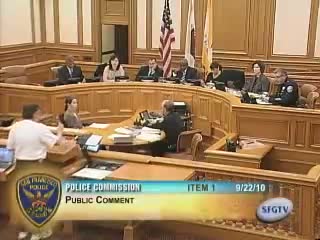
San Francisco Police Commission hears public complaints on records access and Mission District crime briefing
Summary
At a Sept. 22 Police Commission meeting, public commenters pressed the commission on access to records under the city’s Sunshine Ordinance and community members and officers described recent crime and outreach efforts in the Mission District. Commissioners voted to enter closed session on pending disciplinary matters.
The San Francisco Police Commission on Sept. 22 heard public complaints about the department’s compliance with the city’s Sunshine Ordinance and received an update on recent crime and community outreach in the Mission District.
Ray Hartz, director of San Francisco Open Government, told the commission the department and commission had failed to meet Sunshine Ordinance requirements for an index of records and described a multi‑year effort that culminated in determinations from the Sunshine Ordinance Task Force finding violations. “Public records do not belong to your department,” Hartz said, urging commissioners to ensure full public access to documents citizens need to make informed comment.
In a subsequent briefing, Captain Greg Corrales and Sergeant Mario Molina described enforcement and prevention efforts in the Mission District around the Bridal/Vernon dwellings, including saturation patrols, plainclothes operations and targeted arrests. Molina said officers had recovered two guns and made several arrests in the last weeks tied to a recent homicide and associated violence, and said the department attributes part of a long‑term drop in homicides to civil gang injunctions and community policing.
Community representatives — including members of Mission Beacon and the Community Response Network — praised the station’s outreach and described collaborative prevention efforts such as text‑message phone trees and regular advisory‑board meetings. Alfredo Najera read a letter of support that credited Captain Corrales with improved neighborhood coordination.
Commission business included public notice of closed‑session personnel matters described by staff as possible disciplinary hearings under state Government Code and Penal Code exceptions. Commissioners moved to enter closed session to consider those items.
The meeting concluded after procedural items and the commission scheduled follow‑up reports and commission assignments for future meetings.