Get Full Government Meeting Transcripts, Videos, & Alerts Forever!
Get email alerts on the Infrastructure Projects topic
No spam. Unsubscribe anytime.
PUC reports steady progress on local WICIP projects; Calaveras and Bay Tunnel face delays and cost pressures
Summary
Staff told the commission most local Water System Improvement Program projects are on schedule but several large regional projects show schedule slippage and cost increases, with Calaveras and Bay Tunnel singled out for environmental and material‑price challenges.
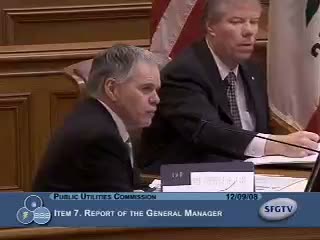
PUC staff and the Water System Improvement Program director reported that of 35 local WICIP projects most are proceeding as planned and roughly 80% of local projects are either under construction or completed. Julie Labonte, WICIP director, told commissioners that overall rolled‑up actual performance was 48.1% compared with a planned 47.8% and that pre‑construction phases are about 90% complete while construction across the program is about 41% complete.
Labonte identified several regional projects experiencing notable schedule slippage and cost variance. The Calaveras project was singled out as the most significant schedule risk; staff said recently required consultation with the National Marine Fisheries Service, naturally occurring asbestos issues and extended environmental mitigation and construction sequencing have extended anticipated timelines. Bay Tunnel and San Antonio backup pipeline delays reflect extended environmental review, and the Bay Tunnel estimate included a material‑cost increase (staff cited about $16 million in material cost escalation and $3 million for escalation in one update). Labonte said some projects experienced cost reductions following value engineering (Irvington Tunnel) or contingency adjustments (University Mount Reservoir contingency reduced about $6 million).
Commissioners pressed staff to show gross totals in future quarterly reports (not only variances) to understand absolute scale; staff agreed to add a total at the bottom of the variance page in the next report. The General Manager also noted a $1.9 billion funding appropriation approved in committee and anticipated before the full Board of Supervisors that afternoon.
Commissioners asked whether further delays are likely; staff said schedules had been optimistic in the past but that recent reviews made current variances more realistic, while cautioning that outcomes depend on avoiding major legal challenges and protracted environmental reviews. The commission did not adopt new project policy at the meeting but directed staff to return with more detailed total‑cost reporting in the next quarterly packet.