Get Full Government Meeting Transcripts, Videos, & Alerts Forever!
Get email alerts on the Wsip Funding And Adoption topic
No spam. Unsubscribe anytime.
SFPUC adopts phased water system plan, asks mayor for $1.92 billion and raises short-term borrowing cap
Summary
The San Francisco Public Utilities Commission approved a phased Water System Improvement Program variant, adopted CEQA findings with added conservation and reporting requirements, and voted to request a roughly $1.923 billion supplemental appropriation and increase the commercial paper cap from $250M to $500M.
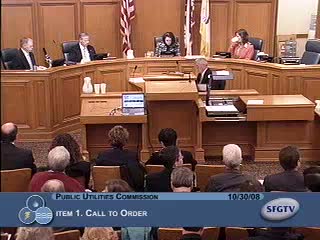
The San Francisco Public Utilities Commission on Oct. 30 approved a phased Water System Improvement Program, adopted related California Environmental Quality Act findings and asked the mayor to seek a supplemental appropriation of about $1.923 billion to fund capital projects and financing costs.
Commissioners voted to endorse elements of a proposed wholesale water service agreement and directed staff to negotiate a new contract in substantial conformance with those elements before the existing agreement expires on June 30, 2009. The commission also voted to seek an increase in the SFPUC's commercial paper program cap from $250 million to $500 million to meet near-term cash-flow needs.
Michael Carlin, the SFPUC manager for water, told the commission the phased variant shortens the implementation horizon to 2018, limits average systemwide sales to 265 million gallons per day through 2018 and allocates 81 MGD for San Francisco retail customers and 184 MGD for wholesale customers. Carlin said the phased approach keeps the program's seismic, water-quality and asset-management goals while deferring some longer-term supply decisions to 2018.
Todd Reedstrom, assistant general manager and chief financial officer, outlined the finances behind the request, saying the next 18 months require substantial construction, design, environmental review and financing activity. Reedstrom said prior appropriations total about $920 million and that the proposed supplemental appropriation would help fund roughly $3.9–$4.4 billion of planned WSIP work overall. He recommended increasing the commercial paper authorization to smooth short-term borrowing; recent short-term yields have fallen from crisis highs to roughly 1.75%–2.5%, he said.
The commission approved the staff recommendation with two amendments added by a commissioner: a requirement that the SFPUC set and report annually on aggressive conservation, recycling and groundwater programs and projections, and a direction for staff to report back within 90 days on efforts to supplement flows on the Tuolumne River to offset the proposed 2 MGD average diversion and better support salmon and steelhead.
The motion to adopt the phased WSIP and CEQA findings passed by voice vote; commissioners also approved endorsement of wholesale contract elements and the supplemental appropriation request by voice votes.
The meeting record shows broad public comment both supporting seismic upgrades and raising concerns about rate, allocation and environmental impacts. The commission's action does not itself implement diversions; project-level environmental reviews and permits will be required for individual projects and any service interruptions or changes to wholesale deliveries would trigger additional CEQA review, staff said. The commission adjourned at approximately 8:00 p.m.