Get Full Government Meeting Transcripts, Videos, & Alerts Forever!
Get email alerts on the Wsip Program Update topic
No spam. Unsubscribe anytime.
PUC says WSIP largely on track but environmental reviews and consultant issues are delaying some projects
Summary
PUC staff reported the Water System Improvement Program is about 45% complete overall, with local projects largely progressing and many regional projects still in design; environmental review coordination, resource agency direction and consultant terminations are the main causes of schedule variances and a net ~$50M cost forecast increase.
PUC staff told the commission that the Water System Improvement Program (WSIP) is broadly on track but that several significant schedule variances remain, driven primarily by environmental review work, consultant staffing problems and planning‑level changes that escalated review requirements.
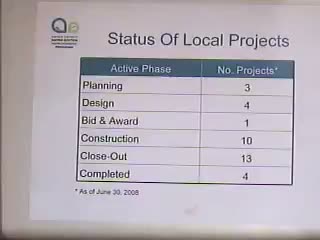
Julie Labonte, the PUC’s WSIP director, said the local program comprises 35 projects (about half completed in construction or beyond) and that the regional portfolio includes about 50 projects with more than half in design. Labonte reported the program index shows overall progress, but that the environmental phase is lagging in several large projects: "environmental and design phases are both about halfway through," she said, and noted fisheries permitting changes in Alameda Creek as one example of external agency direction that required rework.
Labonte attributed delays to a combination of (a) pursuing parallel design and environmental processes that then require iterations when design changes occur; (b) performing a programmatic EIR in parallel with project‑level EIRs; (c) changes to planning department review levels from negative declaration to full EIR for some projects; and (d) replacement or termination of underperforming consultants (six contracts terminated). She described mitigation measures including sub‑activity scheduling, a "consultant surge" to add capacity, focused multi‑day charrette reviews to accelerate interim drafts, and selected contract incentives for early completion.
On costs, Labonte said forecasted cost increases on some projects add to about $58,000,000 while forecasted decreases total about $8,000,000, for a net delta of roughly $50,000,000; she emphasized these are forecasts, not budget changes, and that about 70% of program costs are construction costs. The commission pressed staff on cause and mitigation strategies; Labonte said competitive bidding, contractor outreach, improved bid packages, quality management (95% design packages and multiple independent reviews) and construction management will be used to control costs.
Labonte also flagged near‑term priorities: issuing the final Program EIR (PEIR) on Sept. 30, seeking San Francisco Planning certification and PUC adoption on Oct. 30, and maintaining momentum on large seismic projects including the Harry Tracy work and Bay Division pipeline upgrades. She said she will provide a focused schedule update on the most technically challenging seismic project (Bay Division Pipeline 3 & 4) in the fall.
Commissioners asked staff to continue briefing decision makers and partner agencies early in the process to smooth reviews and approvals. Staff said they would present detailed schedule and cost follow‑ups and keep the commission apprised of consultant procurement and contract management steps.