Get Full Government Meeting Transcripts, Videos, & Alerts Forever!
Get email alerts on the Forensics And Crimelab topic
No spam. Unsubscribe anytime.
Commission presses SFPD for clearer DNA backlog numbers and prioritization policy
Summary
SFPD told commissioners it has prioritized sexual-assault and homicide evidence and assigned liaison officers to the crime lab while continuing a contract process to outsource testing. The department said previous backlog counts were inflated by tracking errors and promised more accurate numbers within about two weeks.
Commissioners pressed the San Francisco Police Department on June 23 for clearer information about the city’s DNA backlog and crime‑lab operations.
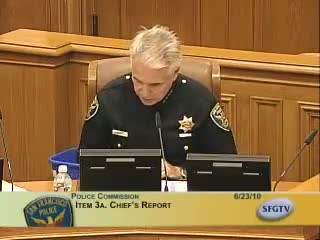
Chief George Gascon said SFPD has assigned officers to full‑time liaison roles between the crime lab and the homicide and sexual‑assault units to prioritize urgent cases while the department completes a contracting process to send more testing to outside labs. The chief said a recent review found that previously reported backlog counts were overstated because some completed reports were not properly entered into the tracking system, and he promised more accurate numbers in about two weeks.
"We have found that the numbers that were given to you last week ... were actually less than that," Chief Gascon said. "We should have [accurate] numbers for you within the next couple of weeks." Commissioners asked specifically about turnaround for cases involving unknown offenders (stranger rapes) and asked staff to report on whether local labs have written policies for expedited processing of those priority cases.
SFPD staff gave comparative turnaround times from neighboring jurisdictions: San Mateo County reported an average of about six months for sexual‑assault cases when they do not have a backlog; Santa Clara County about two to two and a half months; Alameda County sometimes as fast as two weeks to six weeks. The chief said labs can establish emergency prioritization for truly urgent cases and that SFPD will identify and prioritize such cases as part of the backlog review.
Commissioner James Hammer requested the department provide a clear breakdown within two weeks identifying how many backlog cases are stranger‑assaults or other high‑priority samples; he also pressed for a later presentation that breaks down homicide trends by neighborhood. The chief agreed to provide district breakdowns and to supply commissioners with the package of concept numbers that has been prepared for commissioners.