Get Full Government Meeting Transcripts, Videos, & Alerts Forever!
Get email alerts on the Crime Lab Brady Occ topic
No spam. Unsubscribe anytime.
SFPD says crime‑lab workload falling; Brady policy near formalization, OCC provides caseload update
Summary
Assistant chiefs told the commission the DNA and firearms backlogs have fallen substantially and that a formal Brady disclosure policy should be ready in about a week to a week-and-a-half; the Office of Citizen's Complaints reported 413 cases opened and 382 closed to date.
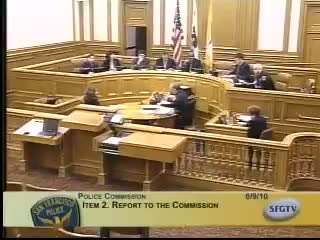
At the June 9 meeting Assistant Chief Jeff Godown reported progress reducing the SFPD crime-lab backlog and said the department was seeking supplemental budget funding to finish the work. "We've got that number down to 330," Godown said of a firearms evidence backlog previously near 1,211. He told commissioners the mayor had allocated nearly $6 million in extra funding for backlog work and that a presentation to the Board of Supervisors was expected soon.
Assistant Chief Morris Tabak briefed commissioners on the department's work to formalize a Brady disclosure policy and said the department was in the second phase of meet-and-confer with the police officers association. "We're probably about a week, week and a half out from formalizing the process," Tabak said, adding the department was following interim protocols and responding to district attorney letters while negotiations continued.
Joyce Hicks, director of the Office of Citizen's Complaints, reported OCC caseload numbers: "As of today, the OCC has opened 413 cases and we have closed 382," she said. Hicks said there were 412 pending cases and the OCC would provide a revised audit report on DGO 8.1 to the commission after reviewing additional department material.
Commissioners pressed for dates and transparency on the budget request that would fund crime-lab work and requested a briefing on administrative-investigation findings once legally permissible. The chief and legal staff said some administrative details must be handled in closed session to protect personnel rights, but they agreed to public briefings where appropriate and to follow up with particulars on when the Brady policy would be available for commission review.
The exchange reflected overlapping oversight responsibilities: commissioners sought timely public information about forensic capacity, disclosure practices affecting prosecutions, and OCC audit follow-up while staff emphasized legal limits on disclosure in active investigations and personnel matters.