Get Full Government Meeting Transcripts, Videos, & Alerts Forever!
Get email alerts on the Medical Cannabis Enforcement topic
No spam. Unsubscribe anytime.
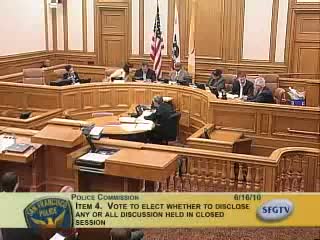
Public urges clarity after police raids on medical cannabis collectives; SFPD schedules multi‑agency meeting
Summary
Patients and advocates told the Police Commission that recent raids on medical cannabis collectives deprived sick residents of medicine and wasted enforcement resources; SFPD commander said a search warrant uncovered a large grow and announced a July 13 meeting with public health and the district attorney to clarify compliance and a possible registry.
Public commenters asked the Police Commission on Wednesday to press for clearer rules and immediate remedies after a recent San Francisco Police Department raid on a medical cannabis collective.
Shona Gopener, who identified herself as a longtime frontline provider for low‑income patients, told the commission that equipment and medicine were seized during the enforcement action and read from a petition urging the district attorney to drop charges and return patients’ medicine. "We, the undersigned, demand that DA Harris drop any and all charges against Access of Love provider, return all of the patient's medicine and growing equipment," she said.
Multiple speakers followed with similar appeals. Catherine Smith, identifying herself as chairwoman of a marijuana 'lowest priority' commission, said 71 raids this year suggested inconsistent enforcement and urged a Board of Health registry so officers can verify collectives' compliance before seizing medicine. Orlan Rael described being stabbed, praised officers who helped him, and asked, "Can I please have my medicine back?" after his own cannabis supply was taken.
Commander John Loftus, the SFPD commander of investigations, responded that the most recent search warrant uncovered roughly 164 plants, about 20 pounds of marijuana, $10,000 in cash, scales and unsafe wiring; he said the narcotics officers involved are experienced in cultivation law enforcement. "It was an unsafe grow operation," Loftus said, describing why PG&E shut power to the house and why officers executed a warrant.
Loftus told the commission the department is working with Access of Love and that a multi‑agency meeting is scheduled for July 13 to include the Department of Public Health and the district attorney’s office to discuss registration and compliance procedures. He also said the department hopes to develop a registration mechanism so officers dispatched on complaints can check whether a site is part of a licensed collective.
Commissioners and staff repeatedly urged calmer, documented processes to separate legitimate medical collectives from criminal profiteers. Several commissioners said they would schedule a formal agenda item and a possible joint hearing with the Board of Supervisors' public safety committee to clarify San Francisco policy and whether department practice matches state guidance.
The Commission did not take formal disciplinary or policy action at the meeting; speakers and the department agreed to continue discussions and to pursue the July 13 multi‑agency meeting as the next procedural step.