Get Full Government Meeting Transcripts, Videos, & Alerts Forever!
Get email alerts on the Procurement Award topic
No spam. Unsubscribe anytime.
PUC awards CS 9/10 contract to ARA amid protests over reference checks and release-of-liability language
Summary
The SFPUC accepted staff’s recommendation May 13 to award the CS 9/10 WESIP professional services agreement to ARA Engineering after staff described evaluation scoring and reference-check processes; two losing bidders protested, arguing reference and waiver language was unclear, and the commission discussed whether the deficiencies were clerical or substantive before voting to accept staff’s recommendation.
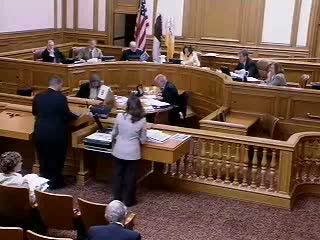
The San Francisco Public Utilities Commission voted May 13 to accept staff’s recommendation to award the CS 9/10 Water System Improvement Program professional-services agreement to ARA Engineering after an extended presentation on the selection process and protests from competing teams.
Harlan Kelly, assistant general manager for infrastructure, described the procurement as evaluated across written proposals, references, oral interviews and a price-related "project multiplier." Reference checks were treated on a pass/fail basis: proposers who provided required reference information and a signed release of liability received full reference points; those who failed to meet the pass criteria received zero points.
Two protesting teams (identified in the record as Firm B and Firm C) argued the reference criterion and the requirement for signed releases were unclear and that staff’s application of the rule disadvantaged them. Ismael Pogueira, representing Firm B, said joint-venture partners had provided references but were unaware that each JV partner’s signature on the waiver was required. "We never understood that both signatures were required," Pogueira said, and asked the commission to reconsider the evaluation.
Staff and the City Attorney’s Office said the RFP contained language requiring a waiver of release of liability and explained that a release signed only for one JV member does not legally waive rights for the other partner. Staff also noted some protests arose from substantive gaps in the project-reference descriptions (missing contact names, dates, project scope or cost) rather than solely from signature technicalities.
Commission discussion weighed equity and process. Several commissioners said the RFP language could have been clearer and that staff would correct the language in future solicitations. Others noted that four of five proposers complied and that ARA followed the stated rules and therefore should receive the award. Commissioner comments emphasized that staff will revise the RFP language to make JV release expectations explicit and consider moving reference checks earlier or making missing releases fatal errors rather than point deductions.
After debate, the commission moved and seconded the staff recommendation to award to ARA and the motion carried. Staff said the procurement process lessons learned would be applied prospectively; the commission did not rescind the award or reopen the solicitation at the meeting.