Get Full Government Meeting Transcripts, Videos, & Alerts Forever!
Get email alerts on the Brady Policy topic
No spam. Unsubscribe anytime.
Commission presses SFPD on Brady disclosures and officer-notification procedures
Summary
Commissioners demanded clarity on how the SFPD discovered the absence of a Brady policy, how officer arrests/convictions are reported to prosecutors, and when a list of potentially affected cases will be produced; the DA has a written policy and SFPD expects to finalize its policy and produce an initial list next week.
San Francisco Police Commission members spent substantial time May 5 pressing the police chief for details about the department—s handling of Brady-related disclosures and whether officers— arrests or convictions were being routinely reported to prosecutors.
Commissioner Petra de Jesus and others said they first learned from press coverage that Brady issues might implicate department employees and expressed frustration that some commissioners were not briefed before a public press conference. The chief acknowledged the department did not have a formal Brady policy in place until he discovered that gap in late September or early October and said the issue had been handled in an ad hoc way at times.
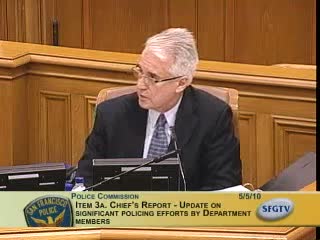
"We do not know exactly how many cases yet that is being reviewed," Chief George Gascon told the commission, adding that the department is conducting a time-consuming file review and is coordinating with the district attorney—s office and the Police Officers Association on labor issues. "We will have a at least the first cut of what this number could be sometime in the latter part next week," he said.
Chief Gascon said the district attorney—s office has completed a written Brady policy and that SFPD was finalizing its own policy and an interim case-by-case information-sharing process with prosecutors. Commissioners asked for additional briefings and recommended the policy be agendized for commission review once drafted.
Members also discussed LifeScan, the electronic fingerprinting process, as part of the mechanism that can flag arrests and convictions, and the commission sought assurances that notification and discovery procedures will be clarified and centralized rather than left to ad hoc handling.
Next steps: the chief pledged to deliver a preliminary list of potentially affected cases and to circulate a condensed audit summary to commissioners; commissioners requested the completed SFPD Brady policy be presented to the commission for consideration.