Get Full Government Meeting Transcripts, Videos, & Alerts Forever!
Get email alerts on the Crime Lab topic
No spam. Unsubscribe anytime.
S.F. Police to outsource parts of crime-lab work after DOJ audit finds DNA section largely compliant
Summary
City police announced plans to send a roughly one-year DNA and firearms testing backlog to outside labs after the Department of Justice—s audit found the SFPD DNA section operational but under-resourced. The department and district attorney agreed to presumptive testing and will issue an RFP for a $5—96 million pilot.
The San Francisco Police Department plans to outsource a significant portion of its DNA and firearms testing backlog after a Department of Justice audit concluded the DNA section is "in good working order" but hampered by staffing and funding shortfalls.
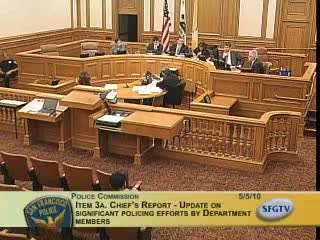
Chief George Gascon told the Police Commission on May 5 that the department is dealing with about a year—s worth of untested evidence and that "the only way" to work through that backlog quickly will be to contract with outside laboratories. Assistant Chief Godot said the DOJ audit of the DNA section was broadly positive and flagged two or three administrative issues tied to personnel and funding.
The department has reached an agreement with the district attorney—s office to use presumptive testing and file cases based on initial results, Chief Gascon said. He estimated the outsourcing pilot could require an RFP in the range of $5 million to $6 million and warned that only a handful of labs nationwide may be able to absorb a workload of this size.
Commissioners pressed for more detail on the composition of the backlog and asked how many sexual-assault evidence kits and violent-crime samples are awaiting testing. Commissioner James Hammer asked for a breakdown of how many kits remain and requested the department propose a timeline and a policy for routine testing when the backlog is cleared.
Chief Gascon said the department will provide specific numbers at a follow-up briefing and said some cases would be prioritized to remain in-house (for example, high-priority violent-crime evidence), while older or lower-priority samples could be outsourced to reduce costs and court burdens. "We will continue to staff our lab appropriately," he said, adding that outsourcing will be used as a "safety valve" when workloads spike.
Assistant Chief Godot told the commission the DOJ would return to audit the firearms section and said the department planned to present the criminal investigation to the attorney general—s office for filing. "The Department of Justice came in and did an audit of the DNA section ... the lab was fine," Godot said at the meeting.
Next steps: the department will return to the commission with precise counts of outstanding kits and a proposed procurement schedule. Commissioners asked that the department present an implementation timeline and proposed standards for how long new DNA samples should take to test once the backlog is addressed.