Get Full Government Meeting Transcripts, Videos, & Alerts Forever!
Get email alerts on the Utility Undergrounding topic
No spam. Unsubscribe anytime.
PUC hears update on citywide utility undergrounding; staff warns work stalls without new funding
Summary
Public Works reported the Utility Undergrounding Program is roughly halfway complete — 25 of about 45 miles undergrounded and 7,000 properties converted — but staff warned that without a citywide funding mechanism (Rule 20 surcharge or Board action) large-scale work will be limited until at least 2018.
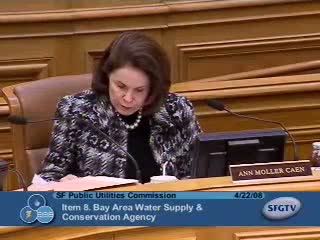
Dan McKenna of the Department of Public Works told the San Francisco Public Utilities Commission on April 22 that the city’s long-running Utility Undergrounding Program has completed about 25 of roughly 45 miles and converted about 7,000 properties to underground electric service. "This summer we should be substantially or completely finished with the program," McKenna said, summarizing progress and remaining tasks.
McKenna described how the program began in 1996 and progressed in fits and starts because of litigation, utility bankruptcies and a petition-driven approach that created inequitable “islands” of undergrounding. He said remaining work is dominated by property-level conversions — which can cost owners roughly $1,500 to $2,500 — and by the need to coordinate with PG&E and other utilities to remove overhead wiring once properties convert.
McKenna gave a fully loaded cost estimate of about $5,700,000 per mile and told commissioners the current project funding sources (Rule 20A and Rule 20B) leave the city without a path to continued, systematic undergrounding after the next few months. "When we finish our project this summer, there will be no undergrounding unless it's community sponsored or private sponsored until at least 2018," he said, noting that a CPUC surcharge of about 5 percent on gas and utility bills was among Task Force recommendations to complete citywide undergrounding over decades.
Commissioners pressed staff on comparisons with San Diego and on whether the Board of Supervisors or the mayor’s office would pursue a surcharge or other funding to restart strategic work. McKenna said the undergrounding task force recommended a transparent long-term master plan, a streetlight master plan, and a surcharge option but that action rests with the Board of Supervisors. Commissioners asked staff to return with a briefing on what it would take for the commission to support a surcharge or other Board action.
Why it matters: the program affects neighborhoods' streetscapes and public safety (less overhead wiring in earthquakes), but large-scale advance depends on financing choices outside the PUC’s direct authority.
What’s next: staff suggested preparing a toolkit for Rule 20B community projects and agreed to coordinate with CPUC and the Board of Supervisors on funding options and an informational memorandum for commissioners.