Get Full Government Meeting Transcripts, Videos, & Alerts Forever!
Get email alerts on the Department Policy General Order topic
No spam. Unsubscribe anytime.
Commission debates tighter notice and OCC consultation for written orders
Summary
The panel discussed proposed revisions to General Order 3.01 to require pre-submission consultation with the Office of Citizen Complaints and faster calendaring for substantive bulletins; commissioners asked for clearer timelines and definitions and requested 30 days for review.
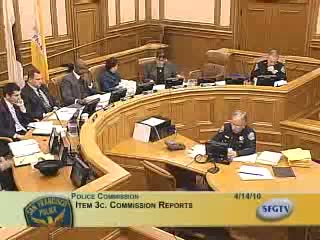
At its April 14 meeting the San Francisco Police Commission reviewed proposed revisions to General Order 3.01, the department’s written‑communications policy, that would formalize Office of Citizen Complaints (OCC) consultation and create quicker notification when department bulletins make substantive changes to general orders.
A representative from the department’s legal division told the commission the change would require SFPD and OCC to meet and exchange views before a general order is placed before the commission, citing Police Commission Resolution 2076 (the Sparks Resolution). The proposed language would also require calendar notice—two weeks in the draft—for any bulletin that makes a substantive change so commissioners can be apprised quickly rather than waiting for the quarterly Sparks report.
The legal presenter said the department found relatively few substantive bulletin-driven changes in recent years but argued the revision strikes a balance between operational flexibility (allowing quick changes when law or exigency requires) and transparency. Commissioners sought added clarity on several points: who may issue unit or bureau general orders (definitions of "officer in charge" and commanding officers), explicit time frames for legal review and indexing prior to enactment, and whether the two‑week requirement should instead be a longer review window to accommodate reorganization.
One commissioner recommended a 30‑day review to ensure reorganization language is correct and to provide time frames for bureau and unit-level review; the legal presenter said the language can be cleaned up to require review "prior to enactment." The commission agreed to further edits and expects the revised draft back for consideration on a near-term calendar.
No formal vote to adopt changes was taken. Commissioners instructed staff to bring a clarified draft that includes precise time frames and definitions before any vote.