Get Full Government Meeting Transcripts, Videos, & Alerts Forever!
Get email alerts on the Crime Lab Integrity topic
No spam. Unsubscribe anytime.
SFPD suspends controlled‑substances work after audit finds weight discrepancies tied to one criminalist
Summary
SFPD officials announced an internal audit found weight discrepancies in powdered‑cocaine evidence linked to a single criminalist; that specialist was arrested in San Mateo County, has retired, and the department has temporarily shut down its controlled‑substances unit pending retesting and an external audit by outside labs and ASCLAD representatives.
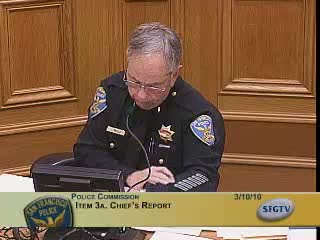
San Francisco Police Department leaders told the Police Commission on March 10 that an internal audit of the crime lab identified weight discrepancies in a set of evidence envelopes for powdered cocaine connected to one criminalist. The department said the discrepancies prompted a criminal investigation, a search warrant and an arrest in San Mateo County on March 3; the employee has retired and is no longer an SFPD employee.
Assistant command staff and the chief’s representative said the allegations so far do not indicate fabrication of non‑narcotic evidence, but concern weight variances in powdered‑cocaine packaging tied to one criminalist. The department temporarily shut down the controlled‑substances unit while it coordinates retesting of affected evidence with several regional labs and the Drug Enforcement Administration. The department has asked an independent outside audit (through ASCLAD and other lab partners) to examine procedures and the broader unit’s practices.
Chief spokesman (label 38 in transcript) said the department contacted the San Mateo County Narcotics Task Force and other regional partners to retest material and that the criminalist in question was arrested after a search of a residence. He said: "The allegations involve no fabrication of evidence. Strictly the allegations involve the weight discrepancies and a limited amount of evidence envelopes limited to 1 criminalist." The department estimated the external audit could take most of the month to complete and promised to share findings; it also is preparing MOUs so criminal prosecutions can continue while retesting occurs.
The presentation included staffing and capacity concerns. A preliminary audit draft cited staffing shortfalls and mandatory overtime in the lab: San Francisco’s total criminalist staffing was quoted as roughly 15 criminalists with about 1.5 dedicated to controlled‑substances analysis, compared with larger staffing complements in comparable county labs. Presenters said the lab has nine vacant criminalist positions and that vacancies and frozen hires over several budget cycles contributed to capacity problems and testing backlogs.
Next steps: the department said it has reached out to regional labs (San Mateo, Alameda, Santa Clara and Sacramento counties, Oakland, and the DEA) to reanalyze affected items, will open its lab to an independent audit arranged through ASCLAD, and expects a report at the end of that audit. The department said it would work with the district attorney, public defender and the courts to minimize case delays and to determine whether any additional criminal or administrative charges are appropriate.