Get Full Government Meeting Transcripts, Videos, & Alerts Forever!
Get email alerts on the Crime Lab Investigation topic
No spam. Unsubscribe anytime.
Police commission hears update on crime-lab probe and possible mass case impacts
Summary
Commissioners and the chief discussed an ongoing criminal investigation into allegations involving a retired lab analyst and DOJ retesting that could affect many drug prosecutions; the department said the controlled-substances section is closed and many cases are being retested or sent to outside labs.
The San Francisco Police Commission on April 7 received an update from Chief George Gascon about an ongoing criminal investigation into alleged problems in the department's drug testing operation, including review of work by retired analyst Deborah Madden.
Chief George Gascon said the criminal investigation is "ongoing" and that the department is pushing to complete the probe by May. He told the commission that evidence from some older cases has been sent out for retesting in Sacramento and that the team working the criminal side is reviewing documents to determine whether additional interviews or charges are appropriate.
"We will determine whether it will be appropriate to reinterview her and then determine whether her attorney would allow her to be reinterviewed," Gascon said. He also told commissioners the department had sent a subset of cases to federal investigators after an internal audit and that initial requests from the Department of Justice were scaled back from an earlier, larger request.
Department staff explained that the DOJ initially asked for 1,100 cases, then requested 25% of Madden's cases plus a 25% sample of the other analysts' cases. The staff said about four samples have been identified with weight or measurement issues, but cautioned that those results require further technical vetting — "we're not 100% confident" about the reason for the discrepancies until retesting clarifies whether net or gross weight was used in original measurements.
Commission members pressed the department on how a small number of flagged samples could relate to reports of hundreds or thousands of dismissed cases. Gascon acknowledged the situation is "much more nuanced," saying cases that rely solely on the lab test evidence are most at risk of dismissal, while cases with independent corroborating evidence or other charges can still be prosecuted.
The chief confirmed that the controlled-substances section was closed in March and that affected cases are being sent to regional or outside labs. "We're gonna clean up the lab," he said, "and we have to make sure that in the meantime that we're being smart about what we do." He added that even after reopening, much work will remain farmed out because existing in-house capacity does not meet industry standards.
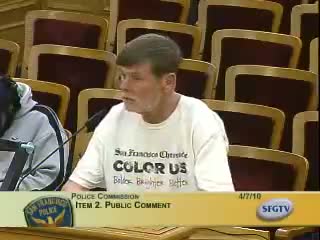
A public commenter who identified himself as a District 6 resident warned the commissioners that "this is a volcano" and that the fallout from the lab problems was likely to become a major public issue, saying "these cases are falling out ... it's gonna get ugly."
The commission did not take a formal action on prosecutions; Chief Gascon and staff said they are coordinating with the district attorney's office to determine which cases can be retested and refiled. Gascon reiterated the department's commitment to complete the criminal investigation and to continue arresting and processing new cases while older evidence is reviewed.