Get Full Government Meeting Transcripts, Videos, & Alerts Forever!
Get email alerts on the Procurement Policy topic
No spam. Unsubscribe anytime.
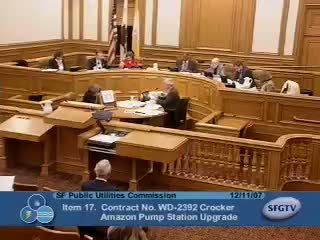
PUC approves three engineering contracts after debate over CH2M Hill’s prior program role
Summary
The commission approved three professional services agreements after an extended debate over whether firms that left the program management team should receive follow-on work; the city attorney said no state-law conflict existed but commissioners directed staff to return in January with clarified policy language.
The San Francisco Public Utilities Commission voted to approve three professional-services agreements for engineering, systems engineering and pipeline condition assessment after a lengthy discussion about procurement policy and perceived advantages for consultants who had previously worked on program management.
Commissioner Paul Sklar raised the issue that CH2M Hill — which had been part of the program-management team until stepping aside recently — was receiving multiple contract awards in quick succession. Sklar said the sequence raised appearance and fairness questions and asked whether the city’s RFP language and prior policy should bar such firms from later competing for WISIP-related professional services. “It just leaves me uncomfortable with the smell test,” Sklar said.
Deputy City Attorney Doreen Ambrose told the commission staff had reviewed the procurements and found no government-code violation. Ambrose and staff additionally noted that the RFPs and addenda limited participation in certain design and construction roles while allowing waivers in cases where a firm had left the program team and did not have a legal conflict. Staff said the three contracts in question were not design-engineering work that the policy categorically prohibited.
Staff explained the procurement outreach that preceded the awards and noted circumstances such as bid withdrawals and limited competition in specific solicitations. Commissioners pressed staff to return in January with a clarified interpretation of the PUC’s conflict/waiver policy, particularly as the commission moves into the Centimeters regional and trade-package procurements.
After the debate, the commission approved the three agreements as amended to record the commission’s policy direction and to ensure staff would provide clearer policy language in January. The motion carried on a 4–1 vote.