Get Full Government Meeting Transcripts, Videos, & Alerts Forever!
Get email alerts on the Civil Rights topic
No spam. Unsubscribe anytime.
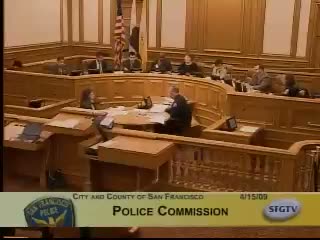
Police Commission Adopts Revised EEO Order; DHR to Handle Most Police Discrimination Complaints
Summary
The commission voted to adopt revisions to Department General Order 11.07, transferring primary responsibility for EEO investigations to the city Department of Human Resources, shortening filing time to 180 days and adding gender identity to protected categories.
The San Francisco Police Commission unanimously adopted an amended Department General Order 11.07 on May 2009 that transfers primary responsibility for discrimination and harassment investigations from the police department to the city—s Department of Human Resources (DHR).
Lieutenant Brown, who led the review, said the change aligns SFPD practice with other city departments, reduces conflicts of interest and gives police personnel the express right to appeal DHR findings to the Civil Service Commission. Key procedural changes in the amended order include a reduction of the administrative filing period from 365 days to 180 days, expansion of protected categories to include gender identity (and confirmation that sexual orientation has been covered), and the option for parties to use mediation where appropriate.
"This transfer is intended to assure conformity of the police department's EEO complaint procedure with other city departments and to remove any appearance of conflict of interest," Lieutenant Brown said during her presentation. DHR representatives told the commission that two DHR investigators already have received training on peace-officer confidentiality and the Police Bill of Rights and that DHR has experience investigating public-safety personnel from other departments.
Commissioner Lee moved for adoption; the motion was seconded and approved by the commission without objection. The adopted order directs the police department to complete any investigations filed before the effective date and to appoint an EEO liaison to coordinate the transition with DHR. Discipline remains under the chief of police and the police commission: DHR prepares findings, and discipline is implemented, if appropriate, per existing charter authority.
Commissioners asked logistical questions about the continuity of current investigations, the financial arrangements for DHR investigators, and the liaison role. DHR staff told the commission there is no ongoing work-order cost after the transition beyond any initial training and that two DHR investigators already have been conducting related work with police personnel.
The order takes effect after the commission—s adoption; implementation steps include completing currently open investigations within SFPD and coordinating DHR training and liaison meetings.