Get Full Government Meeting Transcripts, Videos, & Alerts Forever!
Get email alerts on the Disciplinary Rules topic
No spam. Unsubscribe anytime.
Police Commission begins moving to update disciplinary-trial rules, seeks draft and sets timetable
Summary
Commissioners directed the city attorney to circulate a draft of proposed updated rules governing police disciplinary hearings (informed by recent fire commission rules), discussed timeline goals (examples: hearing start within 60 days, decision within 120 days) and asked for commissioner comments ahead of a follow-up meeting in early February.
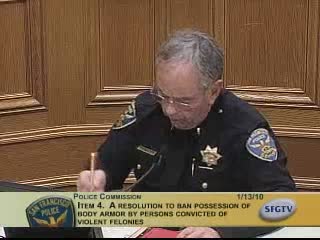
Commissioners on Jan. 13 took a formal step toward updating the Police Commission—s rules governing disciplinary trials, which the meeting record notes have not been comprehensively revised since 1991. Commissioner James Hammer, who placed the matter on the agenda, said the change is intended to reduce a backlog of cases and create clearer timelines and procedures.
The City Attorney (referred to in the meeting as "Miss Blitz") described the fire commission—s recently revised rules as a model, noting that those rules introduced time limits for commencing hearings and for completing decisions — goals that included, for certain formal charges, starting within roughly 60 days and rendering decisions within roughly 120 days. She described two time‑limit models used by the fire commission (a three‑hour model allocating 1.5 hours per side and a six‑hour model for more complex matters) and said the rules incorporate pre‑hearing filings, deadlines and options for the presiding officer to set case‑specific time limits.
Commissioners discussed the balance between speed and due process. Some asked whether chief's‑level appeals (maximum 10 days' discipline) could be handled in writing to speed resolution; others urged retention of an impartial process that protects accused officers' rights. The chief and other commissioners emphasized the need to maintain the Office of Citizen Complaints' role and to involve unions and other stakeholders in any rule changes.
The commission requested that the City Attorney circulate the draft rules to all commissioners promptly (City Attorney indicated she would attempt to distribute the draft by Friday or Monday following the meeting). Commissioners agreed to provide written comments on a compressed schedule (one week after distribution was proposed) so the City Attorney could incorporate feedback and return a revised draft for public discussion in early February.
The discussion also included an operational recommendation: where possible, set short timelines to reduce backlog but account for current staff capacity constraints that may limit how quickly hearings can be scheduled and evidence taken. No formal vote was taken on rule text at the meeting; the action was procedural and focused on next steps in drafting and stakeholder engagement.