Get Full Government Meeting Transcripts, Videos, & Alerts Forever!
Get email alerts on the Data Quality topic
No spam. Unsubscribe anytime.
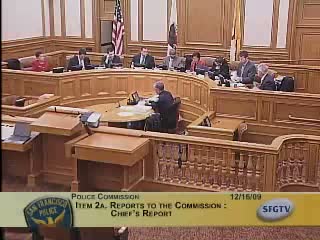
S.F. police chief tells commission crime data are 'corrupt,' says fixes will take months and money
Summary
Chief reported miscoding, duplicate reports and long-standing quality-control failures that undercut the departments crime statistics, including an estimated 1,200 underreported felony domestic-violence cases a year; he outlined short-term fixes, estimated costs and staffing gaps.
San Francisco Police Chief William J. Gascon told the Police Commission on Dec. 16 that the department has uncovered widespread problems in its crime-data systems that have produced inaccurate public statistics and underreporting to federal authorities.
Gascon said cases are frequently miscoded when they are entered into the departments records feed, sometimes creating duplicate report numbers for a single incident or failing to reclassify cases when investigations change the facts. "We either do not have the right coding or sometimes because theres too much discretion cases are being miscoded," he said. He told commissioners the department has identified roughly 1,200 felony domestic-violence cases per year that were not being reported to the Department of Justice.
The chief described the problem as a mix of technology and business-practice failures. He said the existing records-management system purchased years ago from vendor New World never became fully operational and that the departments current IT team consists largely of three people (a director and two officers), which he described as insufficient for an agency this size.
Gascon said Oracle has been assisting the department pro bono to identify anomalies, and that a prospective set of code updates would start Jan. 18 with the goal of having a more functional system by March. He added, however, that cleaning historical data would require significantly more resources and time.
On budget impacts, Gascon told commissioners he has been tasked with producing $6 million in cuts by January and faces possible larger reductions next year in the mid-to-high tens of millions. He said those cuts make it harder to add staff but emphasized that better data are essential to deploy resources efficiently: "We really have to have data that supports where we are going to deploy people," he said.
Commissioners voiced alarm and support for the chiefs transparency. Commissioner Onik thanked Gascon for bringing the problem forward immediately, and several members volunteered to participate in internal briefings and remediation teams. Commissioner Fan urged the chief to quantify pro bono support (such as Oracles assistance) so the commission can make a stronger case for budgeted technology support.
The chief also acknowledged short-term steps: mandatory entry of reports into the system, development of additional incident codes, and business-practice changes to tighten quality control. He estimated that bringing ComStat to the level the department needs would cost in the $6to8 million range and said grant funding might offset part of the expense. He promised regular updates to the commission.
The commission requested follow-up briefings and additional detail about the investments and timelines needed to repair records management, reporting and field tools used by officers.
Gascon concluded by stressing the operational consequences: unreliable data can lead to misallocated staffing and potential officer-safety risks if field tools (for warrants and checks) are impaired. He said the department would continue to prioritize fixes and report progress to the commission.