Get Full Government Meeting Transcripts, Videos, & Alerts Forever!
Get email alerts on the Transmission Project topic
No spam. Unsubscribe anytime.
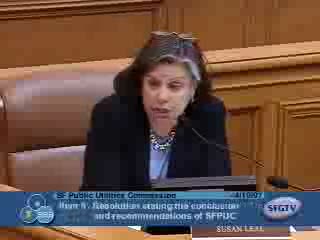
PUC pauses vote on Transbay Cable after ISO testimony and neighborhood opposition
Summary
The commission heard testimony from the California ISO and public opposition about the Transbay Cable transmission proposal and decided to continue the item for two weeks so staff can address alternatives and present additional analysis requested by supervisors and commissioners.
The San Francisco Public Utilities Commission on April 18 heard testimony from the California Independent System Operator and public commenters on the Transbay Cable proposal — a private 400-megawatt, 53-mile under‑bay direct‑current transmission line proposed to run between Pittsburgh and San Francisco with converter stations — and voted to continue the matter for two weeks to allow staff to address alternatives and outstanding concerns.
Larry Tobias, a transmission planner with the California ISO, told the commission the project emerged from an ISO reliability process as the preferred solution to meet the San Francisco Bay Area’s electrical reliability needs. “Transbay Cable is the next step in maintaining reliability,” Tobias said, describing the project as part of a broader action plan to retire older, less reliable local generation and to maintain grid reliability while integrating new resources.
Project proponents and staff framed the cable as a low‑profile option that could be built and permitted at a cost comparable to other alternatives and that could support retiring or removing some older 'must‑run' generation. The project sponsor said the proposal was conceived to assist San Francisco’s energy infrastructure and acknowledged commercial motives (“We’ll make money,” the sponsor said).
Opponents in public comment, including Potrero Hill residents and advocacy groups, urged the commission to pause. David Fierberg of San Francisco Community Power called the proposal “a massive financial boondoggle” that could saddle ratepayers with long-term costs and said the city should prioritize local generation and an updated city energy plan before endorsing the cable. Community members raised neighborhood-level concerns about converter station siting, environmental impacts near waterfront property and uncertain long-term operational use of the cable.
Commissioners questioned the commission’s legal authority — staff clarified the PUC was asked for an advisory opinion to inform the Board of Supervisors and that land‑use discretion rests with city bodies. Multiple supervisors’ offices and the Board president had asked staff to review additional alternatives, and staff said legislation was introduced that morning requesting further analysis.
Given those pending requests and the public testimony, the commission voted to continue the Transbay Cable item for two weeks with direction to staff to present more thorough consideration of alternatives and the policy questions raised. No final advisory recommendation or land-use approval was made at the meeting.