PUC unveils green 525 Golden Gate headquarters design, outlines roughly $190 million plan and funding options
Loading...
Summary
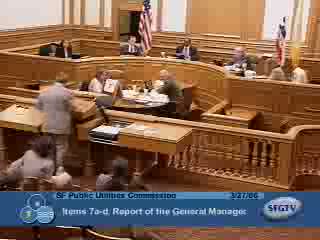
Deputy GM Tony Irons presented a redesigned, sustainability-focused headquarters for 525 Golden Gate that the San Francisco PUC says will cut water and energy use sharply and that it intends to fund through bonds, surplus land sales and grants; commissioners pressed staff to justify higher costs for a civic-center site and asked for more financial detail at the next meeting.
Deputy General Manager Tony Irons presented the San Francisco Public Utilities Commission’s plan for a new headquarters at 525 Golden Gate, describing an architect-modified design that emphasizes on-site solar and wind generation, water recycling and seismic resilience while navigating historic-civic-center design requirements.
Irons said the building has been reduced from 13 to 12 stories to reduce shadow impacts on nearby parks, that the design was refined in an open charrette with outside architects including John King, and that the project would include integrated photovoltaic panels and roof-level wind turbines. "This building...at 6.1 kilowatt hours, annual energy consumption is 60% better than Title 24 energy consumption requirements," Irons said, adding the design is intended to be among the most energy-efficient high‑rise buildings developed in an urban U.S. setting to date.
Irons described water-efficiency features he said would drive very low per-occupant use—presented as about five gallons per occupant per day—and an on-site gray/black-water recycling package that the staff presentation said would reduce flows by about 1,500,000 gallons per year and lower wastewater effluent by roughly 90 percent. On the renewable side, the presentation listed photovoltaic generation figures (presented in the meeting as "214,000 watts") and wind production (presented as "229,000 watts") and proposed 117 of 1-kW vertical turbines; staff told commissioners these elements could supply a substantial share of on-site demand in ideal conditions.
On costs and funding, Irons showed sunk acquisition expenses of roughly $9.9 million to date and said the commission had authorized $1.65 million for further architect design development. A total project figure was shown in a presentation graphic as about $190 million (including sunk costs). Staff proposed a funding package that uses (a) existing rent and operating payments to support about $127 million of debt capacity over a 30‑year issuance, (b) the sale of surplus properties to fund about $35 million for civic-center enhancements and (c) a dedicated grant‑pursuit effort (Irons indicated a grant‑seeking target of roughly $15.8–$16.8 million) to pay for advanced energy components.
Commissioners pressed staff on how the project compares with ordinary office-building costs. One commissioner observed that adding historic‑district and civic‑center requirements increases costs over a typical Market Street office by a significant percentage; another asked what the public receives for a roughly 40 percent premium the presentation showed in certain line items. Irons and other staff said some additional costs reflect mandatory civic-design-review, seismic performance targets for floors housing a child‑development center and mission‑critical SCADA operations, and public art requirements.
Commissioners discussed alternatives to counting on grants, including selling additional surplus land or pursuing a public‑private partnership to capture tax credits and depreciation benefits. Irons said if grants do not materialize the recommendation would likely be to sell additional surplus property. The commission did not take final action on project appropriation at this meeting; Irons said staff plans to return with an action item to appropriate demolition and remaining architectural funds after commissioners submit follow‑up questions by e‑mail.
Why it matters: the project bundles civic design obligations, seismic resiliency for critical utility operations, aggressive sustainability goals and a funding plan that the commission says is intended to be rate‑neutral for customers. Commissioners asked for clearer financial detail and public‑facing materials before any appropriation vote.
What's next: staff will answer commissioners’ written questions, return at the next meeting with any requested clarifications and present a formal appropriation action for demolition and contract funding if directed by the commission.