Get Full Government Meeting Transcripts, Videos, & Alerts Forever!
Get email alerts on the Budget Infrastructure topic
No spam. Unsubscribe anytime.
SFPUC outlines capital priorities and seeks 33 new infrastructure positions amid WESIP work
Summary
At a Jan. 23 Public Utilities Commission budget hearing, the SFPUC presented infrastructure budget details tied to the $4.3 billion Water System Improvement Program (WESIP), projected rate increases, and a request for 33 positions to support design, construction management and environmental work.
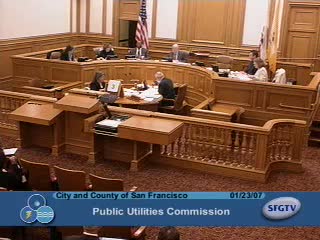
The San Francisco Public Utilities Commission opened its budget hearings Jan. 23 with a focused presentation on infrastructure spending tied to the Water System Improvement Program (WESIP) and related capital work.
General Manager Susan Leal told the commission that the budget hearings would concentrate on infrastructure and program budgeting, noting projected rate increases of about 15 percent for water and 9 percent for wastewater driven largely by rising debt service and WESIP-related costs. Leal said staff aimed to limit new proposals and preserve fund balances while completing multi-year capital programs.
Hartland Kelly, Assistant General Manager for Infrastructure, walked commissioners through the bureau’s organization, staffing plan and principal programs. He described WESIP as a roughly $4.3 billion, 15‑year program and said about 80 percent of infrastructure effort is focused on that program, with the wastewater interim CIP and routine R&R receiving the remainder of resources. Kelly presented a plan that relies on a mix of city staff and short-term consultant support, arguing the model avoids hiring for peak workloads and then laying staff off.
Kelly said the operating budget is split into direct labor (staff who charge to projects) and indirect costs (overhead such as materials, rent and work orders). He provided counts of positions charging to WESIP and related programs and explained the bureau’s overhead multiplier assumptions (baseline ≈2.48, adjusted near 2.44 with this budget). Commissioners pressed for a comparable “all‑in” loaded cost comparison to outside consultants; staff agreed to produce apples‑to‑apples analyses and to calculate a fully burdened internal rate for comparison.
Commissioners and staff discussed risk management and market sensitivity analyses for commodities and construction costs. Tony Irons and staff said CH2M/Parsons consultants are conducting a top‑to‑bottom risk assessment and market analysis (timeline discussed as roughly two months) to inform contingencies and program planning. Kelly emphasized improved reporting tools, online invoicing initiatives and other automation pilots intended to reduce labor intensity.
On staffing, Kelly reviewed 33 proposed new positions across right‑of‑way, project management, construction management, engineering, program controls and environmental management to support the shift toward larger construction activity. Staff said they are confident in recruitment capacity but noted ongoing turnover and internal promotions that can create additional vacancies.
The commission also asked for clearer work‑order summaries, a consolidated picture of money exchanged among PUC bureaus and other departments, and more complete accrual reporting so earned‑value and cash expenditure metrics better align. Scott McDonald (Business Services) said he would supply fuller work‑order and fuel/central‑shops detail during the budget cycle.
The commission received public comment on overhead, accountability and scheduling; staff agreed to provide additional documentation and to return with details on fee structures and timing implications for environmental reviews.
The hearing concluded with follow‑up requests including: a fully burdened internal cost comparison to outside consultants, consolidated work‑order reporting across PUC programs, and the results of the consultant risk assessment when available.