Get Full Government Meeting Transcripts, Videos, & Alerts Forever!
Get email alerts on the Police Reform topic
No spam. Unsubscribe anytime.
Ingleside captain outlines Phase 1 of PERF-driven overhaul; community partners pledge support
Summary
Captain David Lazar presented a rapid Phase 1 rollout of Police Executive Research Forum (PERF) recommendations for Ingleside Station, including a new resource unit, regular problem-analysis meetings, four foot beats and a community panel survey; commissioners and neighborhood leaders praised outreach and urged sustained staffing, translated materials and training.
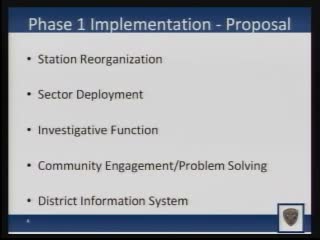
Captain David Lazar, commanding officer of the Ingleside Station, told the San Francisco Police Commission on May 20 that his one-month push to implement Phase 1 of recommendations from the Police Executive Research Forum (PERF) centers on community policing, problem solving and targeted enforcement.
"The goal of implementation at the Ingleside Station is to reduce crime, improve the quality of life through community policing and partnerships," Lazar said as he introduced a management team that includes four lieutenants, a staff sergeant and a named resource lieutenant. He said the station will create a dedicated resource unit to take problems identified on patrol and work them full time until resolved.
The presentation laid out operational changes and measurable steps. Key features include a resource lieutenant and resource unit to own persistent problems; a Problem Analysis Committee that will use the SARA (scan, analyze, respond, assess) model and meet weekly; a district information system and crime analyst to provide near‑real‑time data for deployment decisions; and a target that, under optimal staffing, patrol officers spend no more than 40% of their time responding to calls and more time on community engagement and problem solving.
Lazar said some immediate steps already completed include identifying the resource lieutenant and a staff sergeant, launching consistent foot beats (four initial beats), restoring the housing unit to full strength and streamlining enforcement operations. He described a plan to recruit a crime analyst and to build a city‑district panel of roughly 300–350 volunteers who will receive bimonthly surveys to track community perceptions of safety and police performance.
Commissioners pressed for details about sustainability and outreach. Commissioner (speaker) Onik asked how the initiative would be paced to create lasting change rather than a short boost; Lazar said much of the early work was "low hanging fruit" that could be accomplished quickly and that the longer items would follow through working groups and regular timelines. Commissioner Pan emphasized inclusion of limited‑English communities; Lazar said the station is identifying bilingual foot‑beat officers and plans translations and partnerships with San Francisco State University and other city language resources to improve access.
Community leaders who attended described quick, visible changes in the district and pledged support. "We're really excited about the beginning work that we're doing with Captain Lazar," Buck Baggett, a neighborhood volunteer leader, told the commission; other residents offered to sponsor cell phones for foot‑beat officers and urged translated briefings for the Chinese and Spanish‑speaking communities.
Citywide implementation work was described separately by Lieutenant Mike Field of the Strategic Management Division, who said the department has cataloged roughly 383 PERF recommendations, assigned project managers by bureau, and launched a SharePoint tracking system to prioritize and monitor action items; to date the department has closed 25 recommendations by completion or formal review. Field said recommendations are ranked by impact and effort to guide sequencing.
Why it matters: the Ingleside pilot is the department's testbed for citywide reforms intended to reframe patrol work around problem solving and community partnerships rather than only reactive calls for service. City and community leaders told the commission they want regular updates and access to implementation tracking so they can assess results.
Next steps: Lazar said he will continue forming working groups on staffing, analysis and training, recruit a crime analyst, formalize foot‑beat goals and distribute a shorter public briefing of the 92‑page plan. The commission expects a follow‑up update during the July visit to Ingleside and quarterly progress reports on citywide implementation.