Get Full Government Meeting Transcripts, Videos, & Alerts Forever!
Get email alerts on the Oversight Mediation Eis topic
No spam. Unsubscribe anytime.
OCC reports rise in mediations and higher caseload; commission presses for EIS coordination
Summary
The Office of Citizens' Complaints told the commission it conducted 71 mediations in 2008 (about 7% of complaints) and opened 1,021 cases for the year; commissioners asked for coordinated reporting between OCC and the department’s Early Intervention System to ensure oversight.
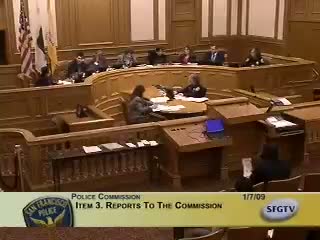
The Office of Citizens' Complaints (OCC) reported to the San Francisco Police Commission on Jan. 7 that mediations and overall caseloads rose in 2008 and that the office plans a February annual report with full statistics.
Director Hicks told commissioners OCC conducted 71 mediations in 2008 — nearly 7 percent of complaints filed — a 50 percent increase over the OCC’s mediation total the previous year. "We can provide you all the specific" survey and program details in the forthcoming report, Hicks said, and added the OCC intends to present a separate mediation analysis later in the month.
The OCC also said it opened 1,021 cases in 2008 (about 70 more than the prior year’s 954) and closed a large number of matters at year end; Director Hicks said staffing and training constraints in 2008 contributed to longer case closure times and that the office aims in 2009 to resolve cases within six months, with a maximum target of nine months after intake.
Commissioners focused questions on the Early Intervention System (EIS) and its reporting cadence. Director Hicks and department representatives explained three layers of notification and review: an early‑morning alert to command when a complaint is filed, quarterly lists of officers who meet complaint thresholds (for example three complaints in six months or four in 12 months), and a monthly interim EIS report that station commanders review with sergeants to identify patterns. Hicks said the goal of these layers is proactive assistance and training, not automatic discipline.
Commissioners asked staff to coordinate OCC and department EIS reports so the commission can view comparable datasets simultaneously and to consider whether interim EIS summaries should be provided while the full system is not yet online. The OCC said it will explore producing summary reports in the interim.
No disciplinary determinations were made in open session; commissioners discussed whether individual personnel matters should be addressed in closed session or presented in generic aggregate form to preserve privacy while providing public oversight.
Next steps: the OCC will deliver a mediation program report and its annual report at an upcoming meeting; commissioners also asked staff to work on cross‑validation of OCC and department EIS outputs and timing.