Get Full Government Meeting Transcripts, Videos, & Alerts Forever!
Get email alerts on the Public Safety topic
No spam. Unsubscribe anytime.
SFPD reports 22 homicides since Sept. 1; department outlines intensified investigations and community outreach
Summary
SFPD officials told the Police Commission the city saw 22 homicides since Sept. 1 and described stepped‑up investigative deployments, interagency teams and community outreach aimed at increasing witness cooperation and reducing violence.
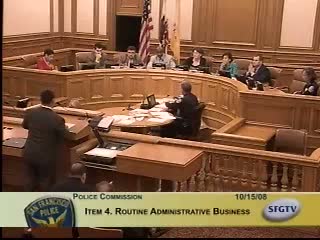
San Francisco — San Francisco Police Department officials told the Police Commission on Oct. 15 that the city had experienced a sharp rise in homicides since Sept. 1 and described a suite of enforcement and community strategies intended to identify suspects and prevent further killings.
"We have an increase of 22 homicides," Commander Murphy said in a presentation to the commission, giving a victim breakdown and an account of how incidents were distributed across SFPD operational zones. He said 17 of the 22 recorded homicides involved firearms, three were stabbings, one was strangulation and one resulted from blunt‑force trauma. At the time of the presentation, investigators had suspects in custody in seven of the 22 cases.
Chief Fong credited timely tips from the public in several recent cases and described how violence‑reduction teams, tactical officers and zone strategies had helped officers locate suspects and recover weapons. "Reporting an incident in a very timely fashion does allow officers to respond quickly and take appropriate action," the chief said during his report.
SFPD described a multiunit response for homicides that combines homicide investigators, narcotics, gang task forces, probation officers and station‑level saturation patrols. Department speakers said those coordinated deployments allow detectives and field units to canvass neighborhoods, identify witnesses, and pursue leads rapidly; they cited several arrests that grew from witnesses coming forward.
Commissioners pressed the department on whether the spike represented a local trend and asked for comparable national and year‑to‑date statistics. They also discussed possible displacement effects from the department's zone strategy and stressed the need to pair enforcement with prevention efforts, including truancy reduction and community services.
SFPD emphasized outreach to communities reluctant to report crimes, noting the department does not check witnesses' immigration status and urging residents to come forward. The commission encouraged broader multiagency engagement and planned to consider ways to solicit community input on factors contributing to violent crime.
The commission was also informed about two PERF (Police Executive Research Forum) public workshops (Oct. 28 and Oct. 29) intended to present study recommendations and solicit public feedback. The commission asked SFPD staff to provide comparative crime figures for the same reporting period to place the local trends in context.
The commission did not take a formal vote on policy changes at the meeting; the department said it would continue investigations and follow up with additional data for commissioners.