Get Full Government Meeting Transcripts, Videos, & Alerts Forever!
Get email alerts on the Public Safety topic
No spam. Unsubscribe anytime.
Central Station captain warns Broadway’s nightlife is straining police resources, urges tighter promoter and permit controls
Summary
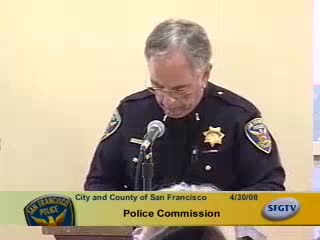
Capt. Jim Dudley told the San Francisco Police Commission on April 30 that the Central District’s Broadway Corridor draws disproportionate weekend policing resources and increases in violent and nuisance incidents; business owners and residents urged a moratorium on large new club permits and better enforcement by the Entertainment Commission.
Capt. Jim Dudley, commanding officer of Central Station, told the Police Commission on April 30 that his 1.9-square-mile district — home to roughly 65,000 residents and 14,000 hotel rooms — requires a focused, neighborhood-by-neighborhood policing strategy, and said concentrated nightlife on Broadway is the district’s chief weekend demand.
"It’s approximately 1.9 square miles of the best that San Francisco has to offer," Dudley said, describing Central Station’s beats and event workload. He urged stronger controls on promoters and said overtime and mutual-aid requests are routinely needed when several clubs dump thousands of patrons onto the streets at the same time.
Why it matters: The Broadway Corridor’s late-night cluster of clubs, restaurants and extended-hours venues repeatedly drew the community’s attention. Residents and small-business owners said violent incidents, fights and disorder have driven customers away from some long-standing businesses while requiring the department to concentrate officers in a six-block area on weekend nights.
Dudley described tactics already in use — a dedicated sergeant with six to eight officers on foot each Friday and Saturday night, motorcycle traffic enforcement and after-action reports for problem venues — and the limits of enforcement without closer cooperation from permitting authorities. "It’s not too much to ask that 2AM be the cutoff," he said, arguing that extended hours increase noise and officer overtime in residential areas.
Business owners and merchants praised the Central Station newsletter and beat officers but pushed for structural changes. Sam Young, who said he opened the first bar on Broadway in 1994, told the commission: "The street’s worse than ever. I mean, there’s shootings, there’s fights." He and other speakers blamed big-capacity clubs and promoters and urged the commission to press the Entertainment Commission and the City Attorney for faster, sustained code-enforcement responses.
Dudley said the police routinely forward incident reports and after-action packets to the Entertainment Commission and the city attorney and that sustained patterns of mismanagement are needed to pursue code-enforcement remedies. He proposed a licensing system for promoters — including ID, a fee, and bonding — to create after-action accountability for events that spawn violence or repeated disorder.
Several commissioners suggested a joint hearing with the Entertainment Commission and discussed options including a temporary moratorium on new large-capacity club licenses in the area while city agencies study permitting and enforcement gaps. The commission agreed to pursue further interagency coordination and outreach.
The meeting closed the discussion with multiple residents and merchants offering ongoing cooperation with Central Station; Dudley said multi‑agency operations (DA, city attorney, entertainment commission, DPW, and DPT) have been used but require labor-intensive follow-up to prove sustained mismanagement at specific venues.
Next steps: Commissioners said they will contact the Entertainment Commission and supervisors about a joint meeting and explore policy options including promoter licensing and temporary moratoria on mega-club permits.