Get Full Government Meeting Transcripts, Videos, & Alerts Forever!
Get email alerts on the Crime Data topic
No spam. Unsubscribe anytime.
SFPD outlines plan to migrate crime-mapping in-house and publish neighborhood reports by summer
Summary
The department told the commission it is moving its crime-mapping import process in-house, upgrading software and auditing data to produce automated neighborhood reports and a public feed (initially CAD data) to a third-party site; officials said they expect an audit complete and phased public launch in June.
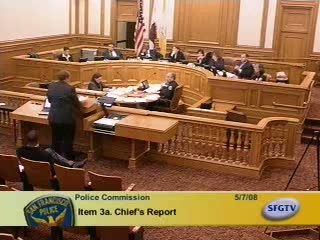
Department technology leaders told the Police Commission on May 7 that they are re-architecting crime-mapping systems and adding a dashboard to produce neighborhood-level crime reports more quickly.
Mark Rinkel, the department’s civilian CIO, described a legacy system that had been hosted externally and had performance and import problems. "Some of the outcomes of that audit ... was basically a migration to move the import process and the actual crime database over to the Hall Of Justice on the police department network," Rinkel said. The plan includes upgrading to the current Omega/ESRI software versions, redoing the import process, completing an import-data audit and building a dashboard that will allow scripted and on-demand neighborhood reports.
Rinkel said Mission-district neighborhood reports have already been produced, and the department’s target is to complete the import audit and begin pushing computer-aided dispatch (CAD) data to a public site such as crimereports.com in June. He described steps to make more raw forms of data available for community groups that wish to aggregate crime data on their own sites. The presentation also noted staffing increases in the crime-analysis unit and plans for an internship program and additional analysts.
Commissioners praised the work and asked about exact target dates. Staff said they expect the audit process to conclude in June and to begin public testing and phased publication of CAD data shortly thereafter, with neighborhood-report templates built into the dashboard environment for automated production.
No formal action was required; commissioners asked staff to provide progress reports and to ensure data accuracy through the planned import audit before public publication.