Get Full Government Meeting Transcripts, Videos, & Alerts Forever!
Get email alerts on the Officer Involved Shootings topic
No spam. Unsubscribe anytime.
Officials say officer-involved shooting reviews are moving but some cases took years to close
Summary
The commission received a detailed update on officer-involved discharges and shootings: the review team narrowed a backlog from 46 to 16 open cases, with several summary letters near completion and one discharge (001-08) found not in policy; commissioners pressed for deadlines and quarterly progress reports.
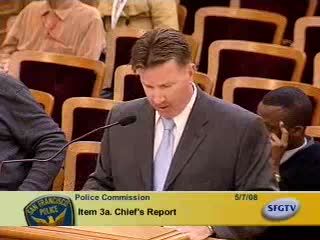
Commissioners on May 7 were briefed on the status of officer-involved-discharge and officer-involved-shooting investigations and the firearms discharge review board process.
Sergeant Joe McFadden, the department coordinator for these cases, told the commission the review panel examined six discharge cases; "All of those cases, except for 1, were found to be within policy," he said, and identified case 001-08 as the exception. He said the panel recommended admonishment and retraining for the officer involved in that off-duty discharge. McFadden reported that the unit began with 46 cases and now had 16 open cases at various stages, with eight summary letters nearly complete and several cases scheduled for upcoming FDRB review.
Commissioners pressed on timeliness and why some files date back many years. One commissioner said it was "inexcusable" for some cases to remain unresolved for five to eight years. McFadden and others cited practical constraints — missing archived records, record-collection challenges, and the requirement to coordinate with homicide investigators and the district attorney’s office for forensic and prosecutorial review — as contributing to long timelines. He estimated that once the older cases are at summary-letter stage the department could close many within weeks and stated a goal of getting present-day cases completed within six months once backlog work is finished.
The commission discussed options to impose clearer deadlines or quarterly milestones, with staff offering to present a dated schedule of summary letters and expected completion dates at the next meeting. The chief and staff emphasized the multi-agency steps (homicide, DA, OCC, MCD) each case requires and that training or discipline may be imposed after final review when warranted.
No formal action was taken on policy changes at this hearing; commissioners asked staff to return with a timeline and suggested revisiting related general-orders to consider deadlines where appropriate.