Get Full Government Meeting Transcripts, Videos, & Alerts Forever!
Get email alerts on the Homicide Statistics topic
No spam. Unsubscribe anytime.
SFPD homicide stats show weapons and neighborhood shifts; department outlines targeted enforcement plans
Summary
Lieutenant John Murphy presented 2007 homicide statistics to the Police Commission, highlighting firearms as the dominant weapon, shifts in district patterns and spikes among Hispanic male victims; SFPD described targeted operations, a 40-officer initiative and increased neighborhood crime monitoring to reduce homicides.
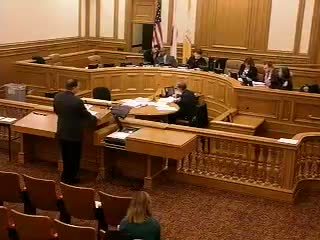
Lieutenant John Murphy of the SFPD homicide detail presented a thumbnail sketch of the department’s 2007 homicide statistics at the Police Commission meeting on Jan. 23 and described short-term operational responses.
Murphy explained monthly and district-by-district trends, noting spikes in some months and particular increases in the Southern and Tenderloin districts in mid-2007 tied to drug-related incidents. He said firearms remained the leading instrument in homicides and that knife-related killings had doubled year-to-year. Demographically, he noted a relative spike among Hispanic male victims and a distribution across age cohorts that included older adults in some incidents.
Murphy and other command staff addressed how the department analyzes motives, clearance activity and displacement concerns. He said some homicide classifications remain “unknown” at the time of reporting and can change as investigative information emerges. The department attributed declines in certain districts to coordinated suppression efforts and described a recent plan to reassign personnel temporarily for concentrated uniform presence in hot spots.
SFPD outlined a proposed operation involving a 40-member uniform team working targeted shifts—particularly evening and early-morning hours—paired with gang and narcotics task forces and probation partners to serve warrants, conduct probation checks and focus on identified high-risk individuals. Commissioners emphasized the need for additional crime-analysis capacity to monitor the effects of enforcement and possible crime displacement; OCC and department staff discussed resource and staffing constraints.
The commission asked the department to supply comparative shooting counts (injuries and nonfatal shootings) for 2006–2007 and to make neighborhood-level, part-1 crime statistics available publicly to assess whether focused tactics produce overall reductions or merely displace crime.