Get Full Government Meeting Transcripts, Videos, & Alerts Forever!
Get email alerts on the Public Camera Privacy topic
No spam. Unsubscribe anytime.
Police chief defends camera pilot as commissioners demand answers after shooting reports
Summary
At the Jan. 30, 2008 San Francisco Police Commission meeting in Richmond, commissioners pressed Chief Fong on an officer-involved shooting and the public camera pilot; Chief Fong said camera footage is obtained via DEM under written request and noted one prosecutable case used footage, while the chief disputed press claims that the shooting victim had a documented mental-illness history.
The San Francisco Police Commission on Jan. 30 pressed the police department for clearer rules about a public camera pilot and for an explanation of procedures after a recent officer-involved shooting.
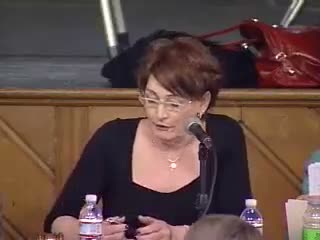
Commission President Teresa Sparks opened the discussion after news reports raised questions about both the effectiveness of camera footage and how footage may have been released. Sparks said she would offer a resolution asking the commission to "approve a temporary discontinuation of operations of those cameras citywide until such time that we're given some type of assurance that the expectation of confidentiality can be maintained." The commission asked that the Mayor's Office of Criminal Justice (MOCJ), the Department of Telecommunications and Information Systems (DTIS) and the Department of Emergency Management (DEM) appear at the next meeting to explain oversight, technical design and storage/release procedures.
Chief Heather Fong told the commission the camera pilot was started through the Mayor's Office of Criminal Justice and that SFPD "only access[es] the video footage upon a memorandum written from the assigned investigator ... through the deputy chief of investigations, to the Department of Emergency Management." She said the cameras are not monitored live and that the department has used footage in at least one prosecution.
On the question of how footage became publicly available, Fong said footage provided to investigators and then to the district attorney as part of criminal discovery can subsequently be disclosed to defense counsel and — in at least one instance — wound up in the public record: "That footage then was provided, to our understanding, in the pros in the discovery process that happens in criminal cases to defense counsel," she said, adding she would consult the city attorney about what steps are possible.
Fong also pushed back on media assertions about the person involved in the recent shooting. "We have no confirmation of any mental illness history in this individual," he said, after reporting in the Examiner and Chronicle suggested a history of mental-health treatment. Fong said checks with the Department of Public Health, the Human Services Agency and department records found no documentation of prior treatment or contact. He offered to brief the commission in closed session and provide a public overview of the department's training on interactions with people in mental-health crisis.
The commission asked staff to request written attendance from MOCJ, DTIS and DEM at the next meeting so the agencies can explain program authority, technical limitations and release protocols. Sparks said she was particularly concerned by press evidence of gaps in the camera sequence and by the possibility that preconditions the commission approved when it authorized cameras (including privacy protections for demonstrations and First Amendment activity) may not have been met.
Next steps: the commission directed staff to invite the oversight and technical agencies to a future meeting and signaled a possible resolution to pause operations pending assurances on privacy and retention practices.