Get Full Government Meeting Transcripts, Videos, & Alerts Forever!
Get email alerts on the Government Transparency topic
No spam. Unsubscribe anytime.
Legal division cites PRA delays; OIS backlog shrinks as FDRB resumes reviews
Summary
The Police Department reported nine late public-records productions tied to staffing and investigative holds and outlined steps to streamline PRA handling; the department also reported progress on officer-involved-shooting reviews, reducing outstanding cases from 43 to 15.
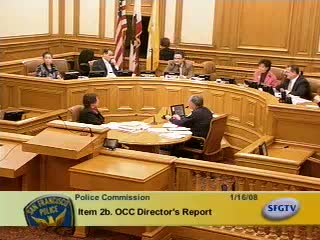
At the Jan. 16 Police Commission meeting the department's legal division and management-control staff reviewed public-records and officer-involved-shooting (OIS) case backlogs and what they said were steps to clear them.
Lieutenant Mike Stasco of the legal division told commissioners the office handled 73 OCC public-records requests in the quarter, with nine late productions and one denial. Stasco described a staffing gap after a long-time legal-division employee left and said seven routine and 63 nonroutine requests were produced timely; late responses were attributed to ongoing investigations, FBI and DA holds, missing CAD entries and reassignments. He described recent streamlining steps and said the division will increase PRA training across units.
Sergeant Joseph McFadden, who coordinates OIS reviews, told commissioners the department made substantial progress on the large OIS backlog. He said the initial list of 43 outstanding cases has been reduced to 15 and that the Firearms Discharge Review Board convened Jan. 11 to review cases. Two cases were found "in policy," and others are pending DA letters and chief-level reviews. McFadden credited interdepartmental teams and new case summaries with the progress.
Commissioners questioned late-production causes and asked that future reports be routed jointly with the OCC director so both requester and producer can comment. They also asked for improvements to internal PRA protocols and for periodic status updates on OIS cases and DA determinations.