Get Full Government Meeting Transcripts, Videos, & Alerts Forever!
Get email alerts on the Firearm Tracing topic
No spam. Unsubscribe anytime.
SFPD outlines comprehensive firearm tracing, says about 60% of traces return usable results
Summary
San Francisco Police Department forensic staff told the Police Commission their eTrace-enabled program traces every booked firearm through the ATF; inspectors said about 60% of traces produce a return and that tracing feeds leads to ATF and local investigators, though the department could not provide a precise arrest tally tied solely to tracing.
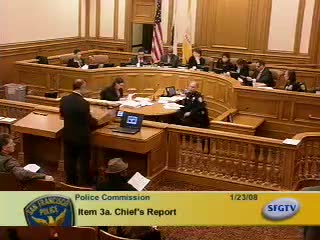
The San Francisco Police Department told the Police Commission on Jan. 23 that it runs a comprehensive firearm tracing program that submits every firearm booked into evidence to the ATF’s National Tracing Center and retains the returns for local analysis.
Dr. Sydney Holt, director of the Forensic Services Division, and Inspector Larry Camilleri explained that the department uses the ATF’s eTrace system to transmit trace requests, record serial numbers, and compile incident details. Inspector Camilleri said the trace package includes the make, model and serial number, incident location, and identifying information on possessors and associates when available.
Camilleri told commissioners the unit conducts a hand-on examination of each firearm and that the department’s trace-return success rate is “approximately 60%.” He said returned traces are analyzed by SFPD analysts and by ATF analysts to identify possible indicators of trafficking, such as multiple-handgun sales by a single purchaser. That intelligence, he said, generates leads that ATF field agents or other investigative units may pursue.
Commissioners asked how many arrests and case closures the tracing program produced. Inspector Camilleri and Chief Fong said tracing contributes investigative leads but that arrest and prosecution for trafficking typically fall under federal or other prosecuting authorities; neither SFPD presenter supplied a specific number of arrests attributable solely to tracing.
Commissioners and staff discussed evidentiary safeguards and whether tracing information is retained or shared. The presenters said the ATF and SFPD both have access to submitted tracing data, that some fields are redacted for confidentiality when legally required, and that SFPD analysts review trace returns for indicators before notifying ATF field representatives.
The commission asked staff to follow up with more detailed metrics on tracing outcomes and with any available counts tying traces to prosecutions or local clearances. The department agreed to provide additional follow-up information.