Get Full Government Meeting Transcripts, Videos, & Alerts Forever!
Get email alerts on the Medical Cannabis topic
No spam. Unsubscribe anytime.
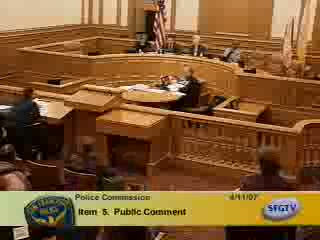
Public urges San Francisco Police Commission to act after liaison allegedly blocks medical cannabis permits
Summary
Scores of public commenters told the San Francisco Police Commission that a co‑deputized narcotics liaison has withheld sign‑offs for medical cannabis dispensary permits and urged the commission to end cross‑deputization and move liaison duties to community services; the commission took procedural votes but did not resolve the permit complaints.
Public commenters at the San Francisco Police Commission meeting on April 1 urged the commission to investigate alleged conflicts arising from cross‑deputization of officers who serve as liaisons to medical cannabis businesses.
The most repeated complaint centered on a liaison identified by multiple speakers as Marty Halloran. Mary Ingram, a disabled San Francisco resident, said the liaison is a "co deputized narcotics officer" and urged the commission to "look into concerns the disability community who use medical cannabis have about cross deputization" and disparate treatment. Naomi Finkelstein of Access of Love told commissioners that Halloran has been "sitting on permits and refusing to sign off on permits in the medical cannabis dispensaries" and warned several permits were due to expire on July 1, which she said would "prevent safe access for sick people." Kathy Smith, who runs the Hope Nook collective, told the commission "He refuses to sign them" and urged that precinct officers, not vice or narcotics, handle sign‑offs.
Speakers framed the issue as a policy problem rather than a personal dispute. Naomi Finkelstein and others said the matter implicates the city's sanctuary status for medical cannabis and called for retraining and formal policy changes. Jonathan Beaver, a medical cannabis patient, argued that cross‑deputization "is in direct conflict with the sanctuary ordinance in San Francisco and should be made illegal." Multiple speakers asked the commission to review whether the liaison's conduct has contravened local rules or improperly deferred to federal enforcement.
The commission did not take an immediate disciplinary or staffing action related to those public complaints during the meeting. The Office of Citizens Complaints (OCC) director, identified in the meeting as Miss Field, said staff pulled open cases related to medical cannabis and counted "about 10 to 20" over the last five years and that OCC would review those cases for policy issues, including an outstanding recommendation regarding seizure of medical marijuana.
Votes at a glance: The commission held a procedural vote to go into a closed session earlier in the meeting; later, under Item 4 the commission voted "non‑disclosure" of closed session discussions (motion made by Speaker 28, seconded, carried without objection). The meeting also approved the Feb. 28 minutes without objection.
What happens next: Commissioners asked staff to coordinate with the city attorney to follow up on legal questions raised during public comment and the OCC said it will continue its case review and report back. The commission scheduled follow‑up questions for the chief and signaled the cross‑deputization matter will remain under scrutiny.
Ending: The meeting concluded after routine business; no formal change to liaison assignments or immediate remedial action on permits was announced.