Get Full Government Meeting Transcripts, Videos, & Alerts Forever!
Get email alerts on the Staffing Recruitment topic
No spam. Unsubscribe anytime.
Commission hears urgent staffing shortfall and recruitment plan as chiefs brief on recent homicide surge
Summary
The commission received a lengthy briefing on recruitment, retention and staffing shortages, with SFPD presenters saying the city faces a gap of roughly 250-275 officers versus Prop D minimums. Chiefs described outreach, bus advertising and online application increases, and deputy chiefs reported 56 homicides year-to-date and 600+ firearms seized as part of violence-reduction efforts.
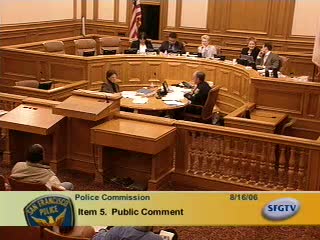
The San Francisco Police Commission devoted the bulk of its Aug. 16 meeting to a detailed presentation and extended question-and-answer on recruitment, retention and staffing and received a simultaneous briefing from the chief's office on recent homicides and field operations.
Captain Ron Roth, who oversees training and recruitment activities, told the commission that San Francisco faces national recruiting challenges (a baby-boom retirement wave and competition from other agencies) and local problems including a high cost of living and a lengthy selection process. Roth said the department's selection ratio is roughly 3—5% (meaning only 3 to 5 percent of applicants reach the academy) and estimated the city needs to add several hundred recruits each year to close a staffing gap. He said the recruitment unit moved to year-round online drives and an outdoor bus ad campaign; online applications rose from about 10 per day to roughly 15 per day during the campaign.
Captain Mark Gonzales (Staff Services Division) provided specific staffing counts: an overall sworn number of 2,188 including academy recruits and airport bureau officers, and an adjusted available-sworn figure of about 1,697 versus the Prop D minimum staffing level of 1,971, implying a shortfall of about 274 officers. Gonzales warned retirements and separations could widen the gap and outlined attrition figures (recent retirements, resignations and probationary releases).
The commission's discussion then focused on selection tests, diversity and attrition. Department of Human Resources public-safety testing manager Dr. Bruce Topp explained that San Francisco uses the POST standardized written examination (the "post test") and cited pass-rate differences on the most recent written exam: 85% for white applicants, 52% for African Americans, 59% Hispanic, 57% Asian and 66% Filipino. Topp described the test's statewide validation and a reading level roughly at the 12th-grade level; commissioners asked for continued monitoring of group pass-rate differentials and whether testing or outreach could be adapted.
Recruitment staff and commissioners discussed multiple reforms under consideration: a lateral-hire pathway for qualified officers from other agencies, a pre-academy to prepare candidates for testing, an enhanced online application experience, a more aggressive and multilingual outreach plan, and potential hiring incentives or housing assistance. Captain Roth said the department is preparing a larger budget request for recruitment next fiscal year and tracking ad campaign results and online application spikes to evaluate return on investment.
Chief Fong and deputy chiefs briefed the commission on a cluster of homicides and the department's response. Deputy Chief DeBach said the department's year-to-date homicide total stood at 56 and that many victims had lengthy San Francisco criminal histories; he emphasized that roughly one-third of homicides fall into categories where prevention by police is limited (domestic incidents, family tragedies, and similar private-events). He highlighted year-to-date enforcement: more than 600 firearms seized and targeted arrest and warrant activity in areas with concentrated violence (Western Addition, Bayview, Ingleside and Mission). Field Operations chief explained how the department redeploys officers, uses tactical teams and partners with investigations and community agencies for targeted enforcement and preventive work.
Commissioners pressed for faster background and eligibility processing to avoid losing candidates to other agencies, for better applicant communications while people await background checks, and for concrete retention incentives (promotion schedules, lateral pay parity, assignment incentives and potential housing supports). Several commissioners and public commenters urged a citywide, cross-agency convening (mayor's office, DA, probation, community-based organizations) to coordinate violence-prevention services, follow-up on CBO funding and match police interventions to social services and reentry resources.
What happens next: the department said it will continue the recruitment campaign, seek additional recruitment funding in the upcoming budget cycle, and return to the commission with follow-up data and proposed program details; commissioners requested periodic updates on applicant pipeline timing, testing pass-rate disparities and the effects of outreach campaigns.
Representative quotes from the meeting included Captain Roth: "We're over 250 officers short of that minimum staffing," and Dr. Bruce Topp on exam pass rates: "85% for whites, 52% African Americans, 59% Hispanic, 57% Asian, 66% Filipino."