Get Full Government Meeting Transcripts, Videos, & Alerts Forever!
Get email alerts on the Copley Decision topic
No spam. Unsubscribe anytime.
Police commission debates reach of Copley Press decision for open disciplinary hearings
Summary
At a continuation hearing, speakers including the SFPOA and ACLU sparred over whether the California Supreme Courts Copley Press decision bars public access to disciplinary hearings or only protects personnel records; the commission voted to seek a city attorney draft of a resolution asking elected officials to consider legislative changes.
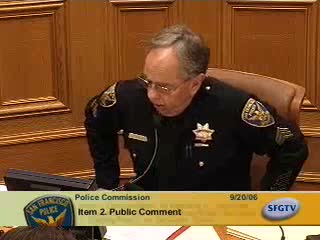
The San Francisco Police Commission on a continued hearing examined the California Supreme Courts decision in Copley Press v. Superior Court (S128603), released Aug. 31, 2006, and what it means for public hearings on disciplinary appeals.
Vincent Harrington, appearing "at the request of the San Francisco Police Officers Association," told the commission the ruling should give pause before the city seeks immediate legislative change. "Right out of the box ... let's go change the law because we don't like this decision," Harrington said, arguing the decision is "clear," protects personnel records statewide and that existing judicial tools (Pitchess motions and protective orders) allow limited, court-supervised disclosure when appropriate.
Commissioners pressed the legal presenters on whether footnote 27 in Copley expressly left open the separate question of whether members of the public have a constitutional right to attend disciplinary hearings. Commissioner Petre De Jesus warned the commission not to presuppose how courts might later rule on attendance rights; "if they decide someone does have a constitutional right to attend the hearing ... they may indicate that the officer's identity is disclosed in that format," she said.
March Slosberg of the ACLU of Northern California urged preserving open hearings and urged the commission to consider action that protects transparency. "There is a great public interest in disclosing information," Slosberg told commissioners and recommended the commission pursue redacted summaries and explore procedural approaches that would allow meaningful oversight.
Legal presenters emphasized a distinction they saw between records disclosure under the Public Records Act and historical doctrines that support public access to administrative or court hearings. One presenter noted the statutes at issue (identified in the hearing record as sections 832.7 and 832.8) focus on personnel records.
After hearing public comment and extended commissioner questioning about operational workarounds (initials, remote viewing, closed sessions for confidential documents), the commission moved into closed session to consider the decisions implications. On returning to open session the commission directed the city attorney to draft a resolution urging elected city leaders to pursue legislative clarification.
The commission did not adopt new procedures at the meeting; commissioners said they would consider options after the city attorneys advice and further study.