Get Full Government Meeting Transcripts, Videos, & Alerts Forever!
Get email alerts on the Transit Operations topic
No spam. Unsubscribe anytime.
SFMTA unveils 90‑day subway plan, cites 40% cut in West Portal delays and a 10% target for peak‑period delay reduction
Summary
Transit Director Julie Kirschbaum told the SFMTA board that recent software, staffing and local control changes reduced delays approaching West Portal by roughly 40% and that a focused 90‑day plan aims to cut peak‑period subway delay by 10%. The board pressed staff on benchmarks, incident prevention and rider communications.
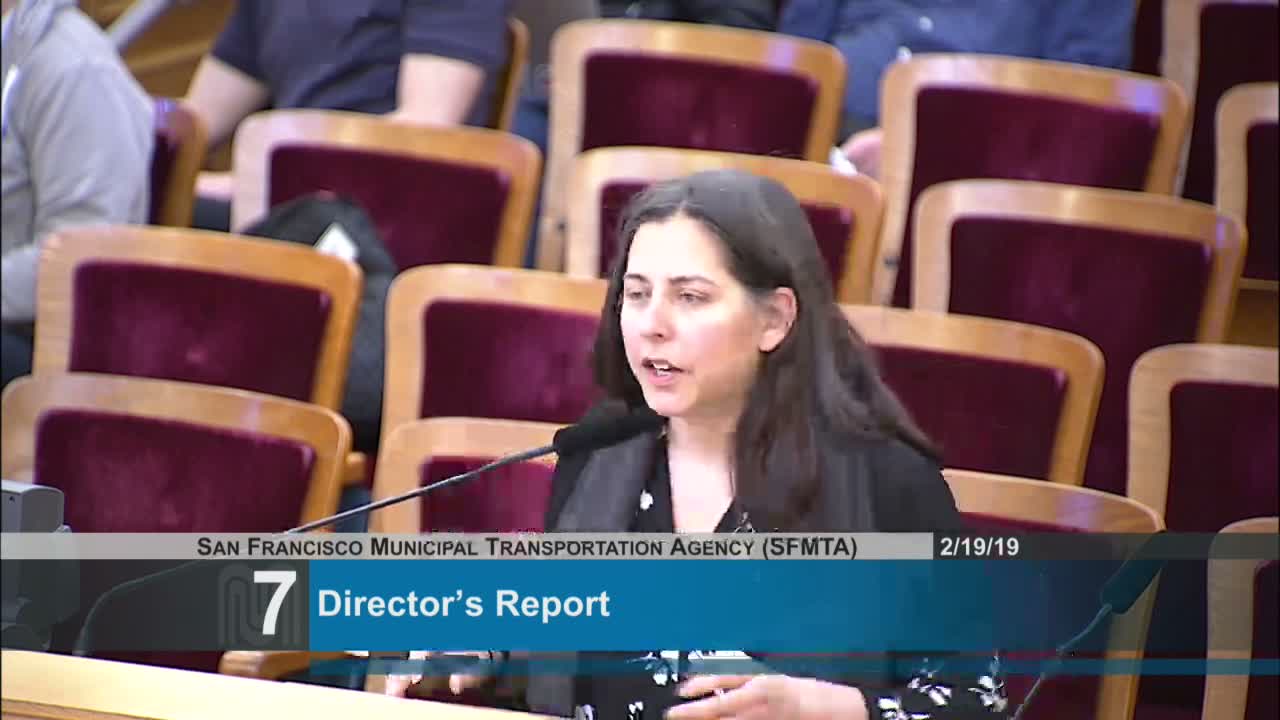
Transit Director Julie Kirschbaum presented the SFMTA board with a monthly deep dive into subway performance and a 90‑day action plan that runs from Jan. 15 to April 15. Kirchbaum said the agency is pursuing two tracks: reduce day‑to‑day delays and variability caused by congestion and signal timing, and cut the number and impact of major incidents that stop service in both directions.
Julie Kirschbaum said staff improved software and on‑site operations at West Portal — adding Pedestrian Control Officers (PCOs), a local train control panel and revised inspector duties — and that those changes have enabled quicker train movements. “In just a two‑week period, we’ve seen a 40% reduction in the delay approaching West Portal,” she told the board.
The presentation outlined vehicle and infrastructure campaigns: coupler adjustments on LRVs (46 cars completed during an MME yard shutdown), a proactive order to replace obsolete switch motors with a six‑month lead time, and redeploying signal staff to key locations. Staff also reported a rare software glitch that caused all three redundant train‑control computers to fail simultaneously; Thales, the train‑control system designer, is developing a software mitigation.
Kirschbaum proposed a measurable 90‑day target to reduce subway delay in peak periods by 10%, to be tracked alongside metrics such as the number of delays over 20 minutes, median travel time (West Portal to Embarcadero ~17 minutes) and Embarcadero turnaround times (target: majority under five minutes). She framed the 10% figure as an interim, 90‑day goal rather than an ultimate system target and told directors she was not yet prepared to set a long‑term zero‑delay target.
Directors pressed staff on context and next steps. Director Eakin asked whether the 10% target demonstrates a trajectory toward zero; Kirschbaum said the 90‑day goals are tactical steps while she develops a longer‑term recommendation. Other questions covered industry benchmarks, software testing/integration for the central subway, the prospect of more automated self‑diagnosing infrastructure, expanded nightly maintenance windows, and improving customer alerts (including possible use of the city’s AlertSF system).
Kirschbaum said the agency will report this metric monthly and combine the subway micro‑metric with the agency’s broader 90‑day targets. Board members emphasized transparency and asked staff to show month‑to‑month metrics (average trip time for key runs, delays by location) so the public and board can see incremental improvements.
Next steps: staff will publish the Vision Zero action strategy next Thursday and continue the 90‑day operational campaign; the board requested monthly updates with the new metrics and follow‑up on software testing and incident mitigation.