Get Full Government Meeting Transcripts, Videos, & Alerts Forever!
Get email alerts on the Transit Service Increase topic
No spam. Unsubscribe anytime.
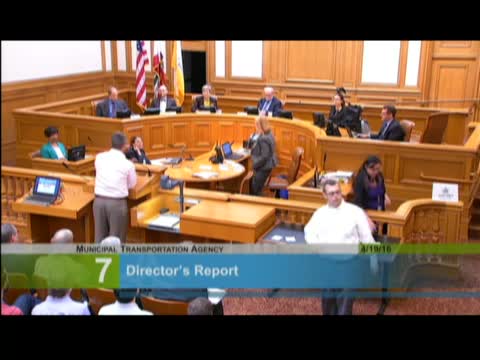
SFMTA to add roughly 10% more Muni service April 23; agency cites rising bike trips and Smart City finalist status
Summary
SFMTA staff announced a package of service increases taking effect April 23 that the agency says will deliver an overall 10% increase, expand hours on multiple lines and improve LRV and rapid reliability; Director Ryskin reported large bike‑ridership gains and that San Francisco is a USDOT Smart City Challenge finalist.
SFMTA officials on Tuesday described a set of service changes that the agency says will deliver a promised 10% increase in street service beginning April 23. Sean Kennedy, Muni operations manager, told the board the package affects 18 lines, extends hours on eight, adds all‑day service on routes such as the 28R and 14R, expands weekend light‑rail vehicle frequency and aims for 10‑minute headways on weekends for lines serving the Market Street tunnel.
"With these changes on April 23 we will be fulfilling that promise of reaching that 10% additional increase in service," Kennedy said. He estimated roughly $20,000,000 annually for the package and described targeted improvements aimed at reducing crowding and improving reliability in the tunnel and on rapid lines.
Separately, Director Ed Ryskin highlighted the agency’s annual bike count and outreach programs. Ryskin said automated counters and intersection surveys showed substantial long‑term growth in cycling at 19 key intersections since 2006, including a reported 184% increase at those sites and an estimated 82,000 weekday bike trips citywide in San Francisco (Ryskin). He also noted the city is one of seven finalists in the U.S. Department of Transportation’s Smart City Challenge, a competition that could bring up to $40 million from USDOT plus private contributions to a winning city.
Board members welcomed the changes and asked staff to monitor service reliability and crowding after the April 23 rollout. Directors emphasized using data to assess performance; one resident and several board members urged timely public availability of route performance reports and updated maps ahead of service changes.
Next steps: Staff will implement the April 23 service changes, monitor ridership and reliability metrics and report back to the board on how the runs perform and whether further adjustments are needed.