Get Full Government Meeting Transcripts, Videos, & Alerts Forever!
Get email alerts on the Overdose Response topic
No spam. Unsubscribe anytime.
San Francisco expands telehealth, shelter and methadone pilots as overdose deaths show early declines
Summary
DPH detailed multiple operational pilots: Beam telehealth (1,100+ calls; 404 buprenorphine pickups), Restore seven-day shelter (156 participants; 84% picked up buprenorphine), new 72-hour methadone starts and post-overdose programs; officials said early results are promising and the work will expand in coming quarters.
Department of Public Health officials described a rapid expansion of treatment access and targeted outreach as part of a coordinated opioid response that aims to reduce fatal overdoses and racial disparities in overdose deaths.
Hillary Connan, director of Behavioral Health Services, said the department has organized its 2024 efforts around expanding medications for opioid use disorder (MOUD), contingency management behavioral programs, and strengthened post-overdose engagement. "So far to date, we are seeing about 15 percent fewer overdose deaths this year to date than in 2023," she said.
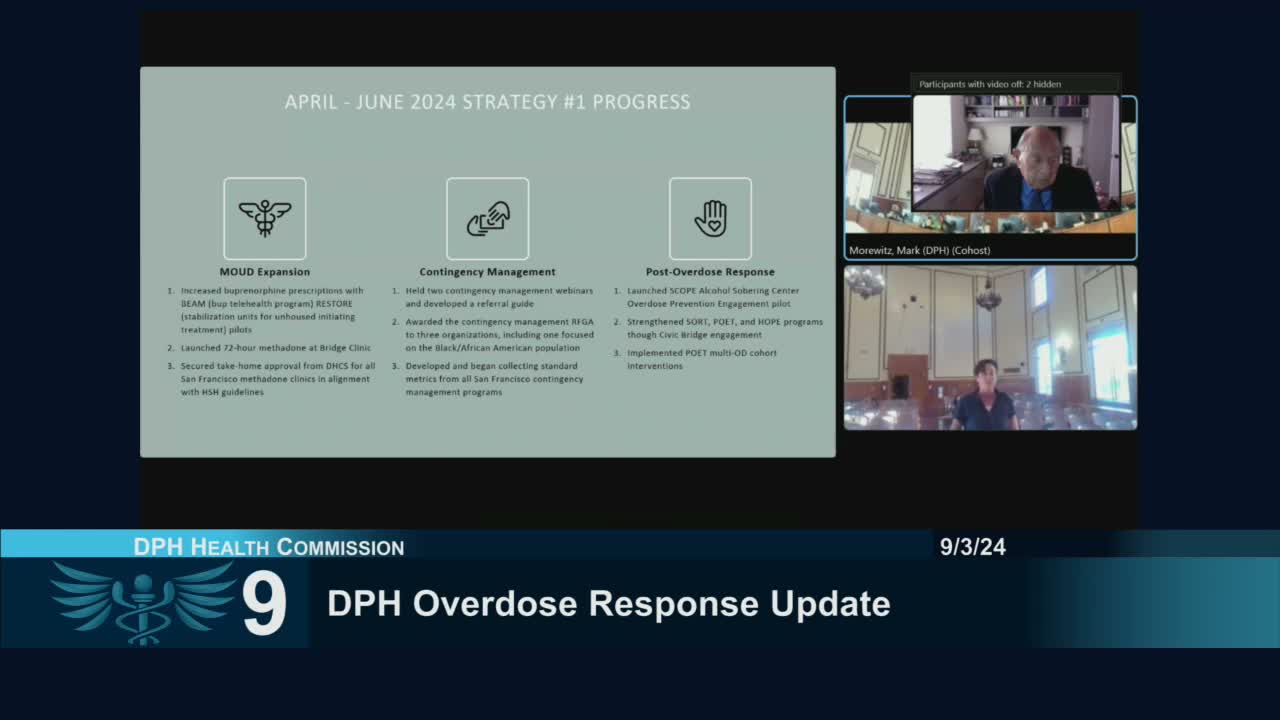
Chris de Gueda, director of strategic initiatives, presented early operational results from several pilots. A telehealth outreach program called Beam, launched in March as an evening pilot, has fielded more than 1,100 telehealth calls and resulted in 404 buprenorphine prescription pickups and 69 confirmed linkages to methadone. The Restore pilot provided seven-day shelter stays (HSH-funded) for people after outreach; of 156 participants, 84 percent picked up a first buprenorphine prescription and more than 80 percent who wanted methadone were linked to programs.
The department also described a 72-hour methadone start pilot at a bridge clinic (35 patients served with 27 starts and 22 successful linkages to opioid treatment programs) and a SCOPE pilot that accepts post-overdose patients at an alcohol sobering center with initial medication linkages. De Gueda said the city is expanding capacity (more shelter rooms, longer telehealth hours) and pursuing state alignment for methadone guidance.
Speakers emphasized targeting equity gaps (particularly high overdose rates in Black/African American communities) and combining treatment with supportive housing and naloxone distribution. Commissioners and staff discussed workforce and bureaucratic hurdles; DPH officials noted new local pharmacy requirements to stock buprenorphine (effective Sept. 1) and asked the governor to sign AB 2115 to align California with federal methadone rules.
DPH said it will return with additional data in coming quarters and continue to scale pilots that show promising linkage and retention outcomes.