Get Full Government Meeting Transcripts, Videos, & Alerts Forever!
Get email alerts on the CalAIM topic
No spam. Unsubscribe anytime.
CalAIM implementation: DPH reports $8M in billing, expanded ECM enrollment and community supports
Summary
San Francisco DPH reported progress implementing CalAIM: enhanced care management enrollment reached about 60% (state avg ~25%), community supports are bringing in revenue, and the city has billed roughly $8 million with an additional $7 million in one‑time state funding directed to DPH.
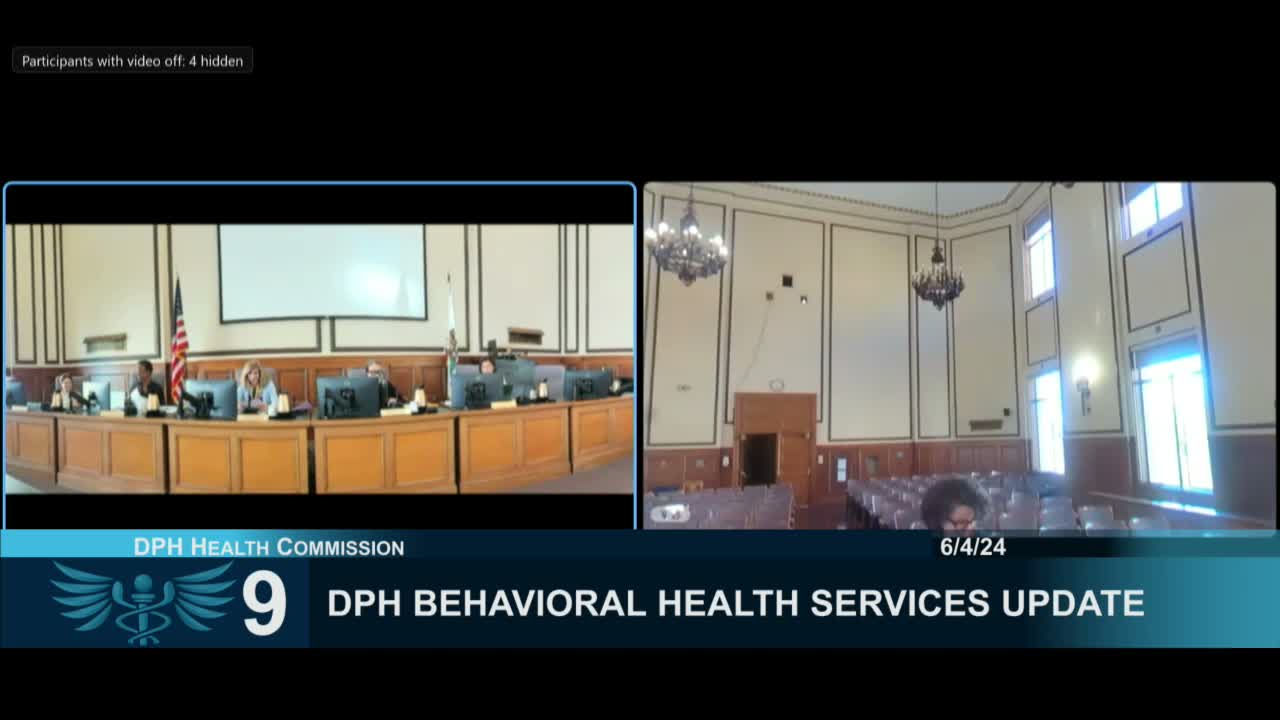
San Francisco Department of Public Health officials briefed the Health Commission on CalAIM implementation across the city, focusing on enhanced care management (ECM), community supports and cross‑agency efforts to scale Medi‑Cal benefits.
Marlo Simmons and Bernadette Gates said CalAIM is reshaping how Medi‑Cal services are delivered, bringing Medi‑Cal managed‑care plans, city agencies and community‑based organizations into coordinated workflows. Gates described examples such as home modifications (grab bars and safety modifications), enhanced care management embedded into street medicine and hospital discharge teams, and community supports like sobering centers and medical respite.
Gates reported ECM enrollment of about 60% since the February 2022 launch—well above the state average of 25%—and attributed that success to peers and community‑health workers with lived experience. She said the city has billed nearly $8 million for ACM (ECM) and community supports and has secured roughly $7 million in one‑time state‑directed funding to support implementation, training and CBO capacity building.
Simmons said CalAIM will increase the need for cross‑agency data sharing and planning, with managed‑care incentives tied to population health management goals. DPH described several next steps, including a citywide CalAIM strategic vision, outcome studies on hospitalization and ED utilization, and launching additional initiatives for children and foster care in 2025.
Commissioners asked about workforce composition for ECM teams (health worker threes, registered nurses, social workers, and licensed behavioral‑health clinicians) and recent improvements in vacancy rates for ECM field teams (from about 70% vacancy in mid‑2023 to roughly 24% at the time of reporting). DPH said it has identified additional teams that could stand up ECM services and is working on central processes to scale capacity.