Get Full Government Meeting Transcripts, Videos, & Alerts Forever!
Get email alerts on the Opioid Treatment topic
No spam. Unsubscribe anytime.
San Francisco pilots nighttime telehealth and safe-sleep linkage for opioid treatment; dozens started meds in first month
Summary
San Francisco DPH launched a nighttime telehealth pilot offering immediate buprenorphine or methadone prescriptions plus a safe place to wait while medications fill; officials said the first month saw more than 55 people begin medication or enter residential treatment and 173 telehealth visits.
San Francisco’s Department of Public Health reported on a pilot program that connects people on the street at night with clinicians by telehealth to prescribe buprenorphine or methadone and offers a safe place to sleep while prescriptions fill.
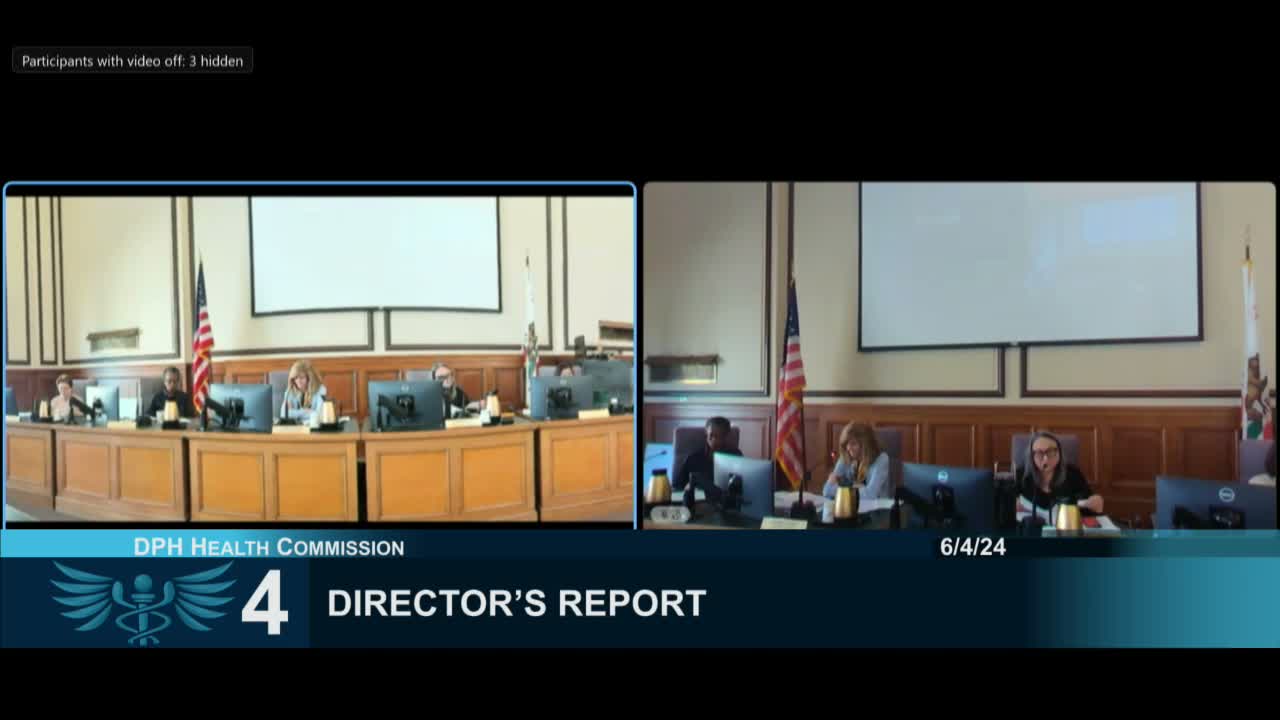
Director Colfax told the Health Commission the city partnered with community organizations and shelter services to create a night navigation team that can provide “treatment on demand.” Colfax said that in the pilot’s first four weeks in March, “more than 55 people started medications for opioid use disorder or entered a residential treatment program,” and that there were 173 telehealth visits and 134 buprenorphine prescriptions issued, with about one-third of those prescriptions filled.
Dr. Conners, the department’s behavioral‑health lead, described the operational pairing of care and shelter: outreach teams make warm handoffs to telehealth clinicians, and when appropriate clients are offered a brief hotel stay while staff arrange next‑day follow up and medication supports. She said the program’s design aims to “get to people in the moment that they want help.”
Commissioners asked about the pilot’s timeline and expansion plans. Colfax said the pilot has no set end date and the department is exploring opportunities to scale the approach and report back to the commission. Commissioners also urged DPH to publicize the program’s availability; Commissioner Dorado suggested coordination with local media and SFGate to raise awareness.
Background and next steps: DPH described the pilot as one tactic within a broader overdose‑response strategy that includes naloxone distribution, expanded formulations of buprenorphine at participating pharmacies, and policy work to increase flexibility in methadone treatment. Officials said they will continue to track fills, retention, and transitions to longer‑term care before determining a permanent rollout.
The Health Commission heard the report as part of the director’s report and had no formal vote on the pilot itself.