Get Full Government Meeting Transcripts, Videos, & Alerts Forever!
Get email alerts on the Covid19 topic
No spam. Unsubscribe anytime.
San Francisco health officials warn Delta-driven case rise; urge vaccinations and targeted outreach
Summary
Health Department leaders told the Health Commission that COVID-19 cases in San Francisco are rising, driven by the Delta variant, but hospitalizations remain low for now; officials emphasized ramping up targeted vaccination outreach to under-vaccinated neighborhoods and monitoring for waning immunity.
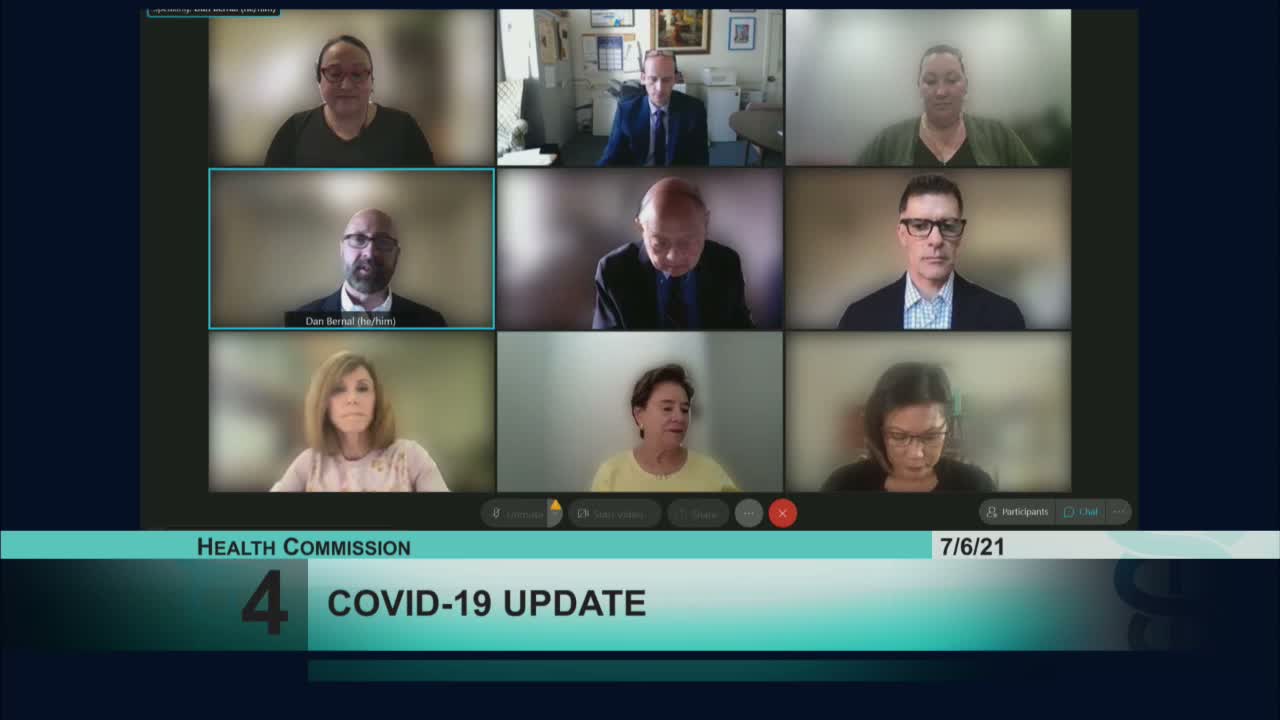
San Francisco Department of Public Health officials told the Health Commission on July 6 that the Delta variant is driving a noticeable rise in COVID-19 cases and urged residents to get fully vaccinated.
Director of Health Grant Colfax outlined recent trends and modeling results, noting a steep percentage increase in cases from a low base and a reproductive rate above 1. Colfax said hospitalizations have not yet increased but warned there could be a lag of a couple of weeks between case increases and hospital admissions. “We still have thousands of people eligible for vaccine who are not vaccinated,” he said, adding that vaccines remain the primary defense against Delta.
Why it matters: Officials said San Francisco’s overall vaccination coverage is high relative to many places, but inequities persist across neighborhoods and demographic groups. Colfax and Dr. Andy Tenner, who leads the DPH COVID task force, said the city must focus on the “last mile” — small, targeted efforts to reach people facing structural barriers, misinformation, or distrust.
The department presented modeling scenarios that assume varying degrees of Delta transmissibility, vaccine uptake and behavioral change. Under a central scenario (50% greater transmissibility for Delta, no major waning of immunity and activity rising to 70% of pre-pandemic levels), models projected a moderate rise in hospitalizations later in the year; more severe scenarios that include waning immunity or higher severity would produce larger peaks.
Officials emphasized that the vaccines available in San Francisco — Moderna, Pfizer and Johnson & Johnson — provide strong protection against severe disease. Colfax said the city is currently administering about 400 first doses per day, which would raise coverage slowly without intensified outreach. “This is a preventable scenario for people who are eligible for vaccine,” he said.
The city’s operational response is shifting from a centralized COVID Command to a department-led task force designed for neighborhood-level work. Dr. Tenner described the task force’s structure, which combines Department of Public Health leadership with community-based mobile teams, neighborhood experts and partnerships with schools and pediatricians to prepare for vaccine rollouts to younger age groups when authorized.
Officials also outlined improved surveillance priorities: increased sequencing to track variant prevalence, closer monitoring of cases among vaccinated people as an early signal of waning immunity or vaccine resistance, and expanded low-barrier testing including point-of-care antigen testing.
What’s next: DPH said it will provide follow-up analyses on cases and hospitalizations by vaccination status and continue to refine outreach strategies, with a focus on under-vaccinated neighborhoods and age groups.