Get Full Government Meeting Transcripts, Videos, & Alerts Forever!
Get email alerts on the Vaccine Rollout topic
No spam. Unsubscribe anytime.
San Francisco health officials say vaccinations have driven COVID drop; network shifts to hyper-local outreach
Summary
Department of Public Health officials reported falling case and hospitalization rates as vaccination coverage rose and outlined plans to reach remaining unvaccinated San Franciscans through drop-in sites, ZIP-code prioritization, mobile and homebound teams, and partnerships with community organizations.
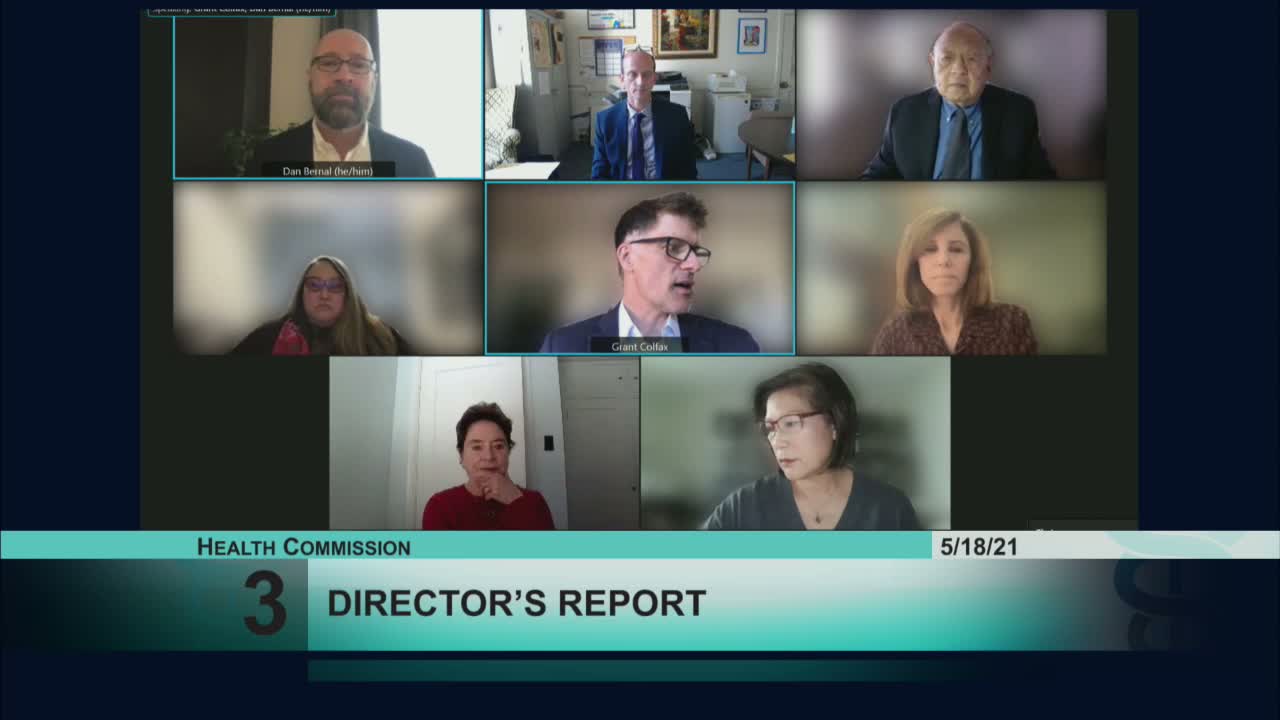
San Francisco's Department of Public Health told the Health Commission on May 18 that a combination of high vaccine coverage and continued safety measures has driven a marked decline in COVID-19 cases and hospitalizations, and that the city will pivot to hyper-local outreach to reach remaining unvaccinated residents.
Director Grant Colfax said the city has recorded 36,487 confirmed COVID-19 cases and 541 deaths to date and reported a reproductive rate of 0.79. Colfax noted state guidance will delay local adoption of the U.S. Centers for Disease Control and Prevention's May 13 mask recommendations until June 15. He told commissioners the city is on track to surpass 1,000,000 vaccine doses administered and that first-dose demand has dropped even as second-dose completion remains strong.
The commission then heard a network presentation from Dr. Ellen Chen, ambulatory care director for population health and quality. Chen described the Health Network's operational strategy: expand drop-in availability, prioritize outreach by ZIP code, deploy mobile and homebound teams to shelters and single-room occupancy residences, and integrate vaccines into routine clinical care. She said the Health Network administered roughly 20 percent of the city's vaccines as of April and reported more than 23,000 doses to staff and about 152,000 doses to patients across network sites.
Chen acknowledged persistent racial gaps in vaccination. She said vaccine uptake is lagging most among Black/African American patients in the network and described targeted steps: warm outreach (phone calls and mailings), piloting health-at-home teams to vaccinate homebound people in disproportionately affected groups, providing lists to primary care teams so clinicians can call patients, and partnering with community-based organizations to schedule and navigate residents to sites.
Commissioner Chow asked about masking guidance and screening in small medical offices where vaccinated and unvaccinated patients mix. Dr. Ehrlich (representing network clinical operations) and Dr. Chen advised continuing masking and distancing in health-care settings for now and described plans to issue updated guidance for clinical networks as the state and federal guidance evolve.
Colfax and Chen said the city has operational capacity to deliver more doses but is responding to reduced first-dose demand by shifting to targeted, relationship-based outreach. Chen said the Health Network is preparing to embed vaccination offers into routine visits and to scale up quickly if cases rise or boosters are recommended. She told the commission the network would continue to prioritize equity in its operations and coordinate with the city's COVID command center and community partners.
The commission had no public comment on the item. The Health Commission thanked network leaders for the rollout and for plans to address disparities; no formal action was taken.