Get AI Briefings, Transcripts & Alerts on Local & National Government Meetings — Forever.
Public-health experts: fentanyl is driving a sharp rise in overdose deaths in San Francisco
Loading...
Summary
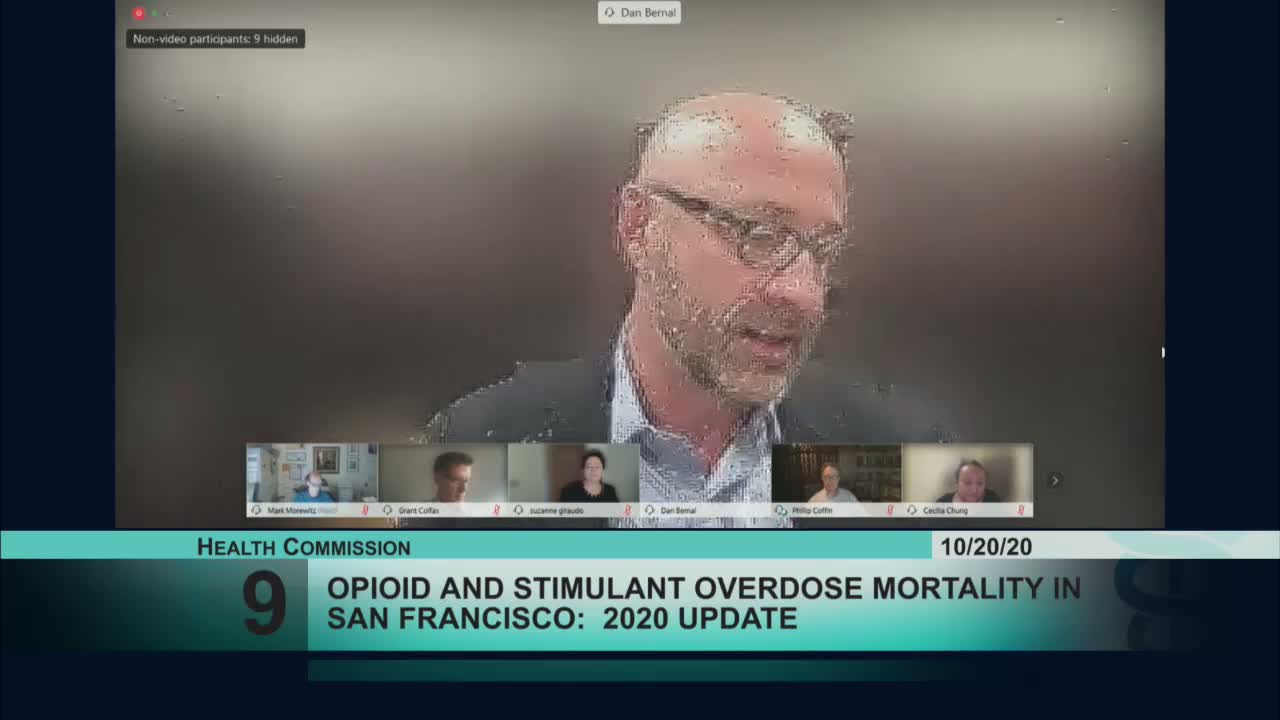
Dr. Alex Coffin told the commission that opioid and stimulant overdose deaths are rising sharply and that "this is all driven by fentanyl," with fentanyl often present alongside stimulants and producing demographic shifts toward younger white and Latinx decedents in some groups.
A data presentation to the Health Commission warned that a surge in overdose mortality in San Francisco is being driven by illicit fentanyl and by fentanyl combined with stimulants.
Dr. Alex Coffin, presenting closed-case mortality data and trend analyses, said fentanyl has become the dominant factor in recent increases: "This is all driven by fentanyl," he said. He described patterns in the data including fentanyl found alone and fentanyl mixed with cocaine or methamphetamine, and a worrying shift toward more deaths among younger white and Latinx people in fentanyl-specific charts. Coffin noted that while opioid prescribing has fallen and buprenorphine prescribing has increased, overdose deaths are rising nonetheless because fentanyl is far more potent and unpredictable than earlier street opioids.
Coffin reviewed prevention and treatment measures already in place: naloxone distribution programs (the DOPE Project reported thousands of refills and reversals), expanded buprenorphine access, the addiction care team at ZSFG and ongoing work to create sobering centers and consider safe consumption spaces. He said no jurisdiction has fully avoided a fentanyl-driven mortality spike and emphasized that multiple intervention streams (treatment access, naloxone, sobering centers and consumption facilities) are needed to reduce harm.
Why it matters: the rise in fentanyl-related deaths affects multiple demographic groups and strains public-health and safety resources. Commissioners asked about gender breakdowns, testing of seized drugs, and the City's readiness for overdose-prevention sites should state legislation permit them. Coffin said fentanyl test strips and naloxone are valuable but that test strips have practical limitations when used on non-urine samples and that expanding buprenorphine and establishing safer-use sites would be important components of an effective response.
Next steps: the department and community partners will continue naloxone distribution, expand low-barrier buprenorphine access, pursue sobering-center work and monitor state legislation that could affect overdose-prevention sites.