Get Full Government Meeting Transcripts, Videos, & Alerts Forever!
Get email alerts on the Project 180 topic
No spam. Unsubscribe anytime.
Health Department proposes Project 180 sobering center in Tenderloin; neighbors demand more outreach
Summary
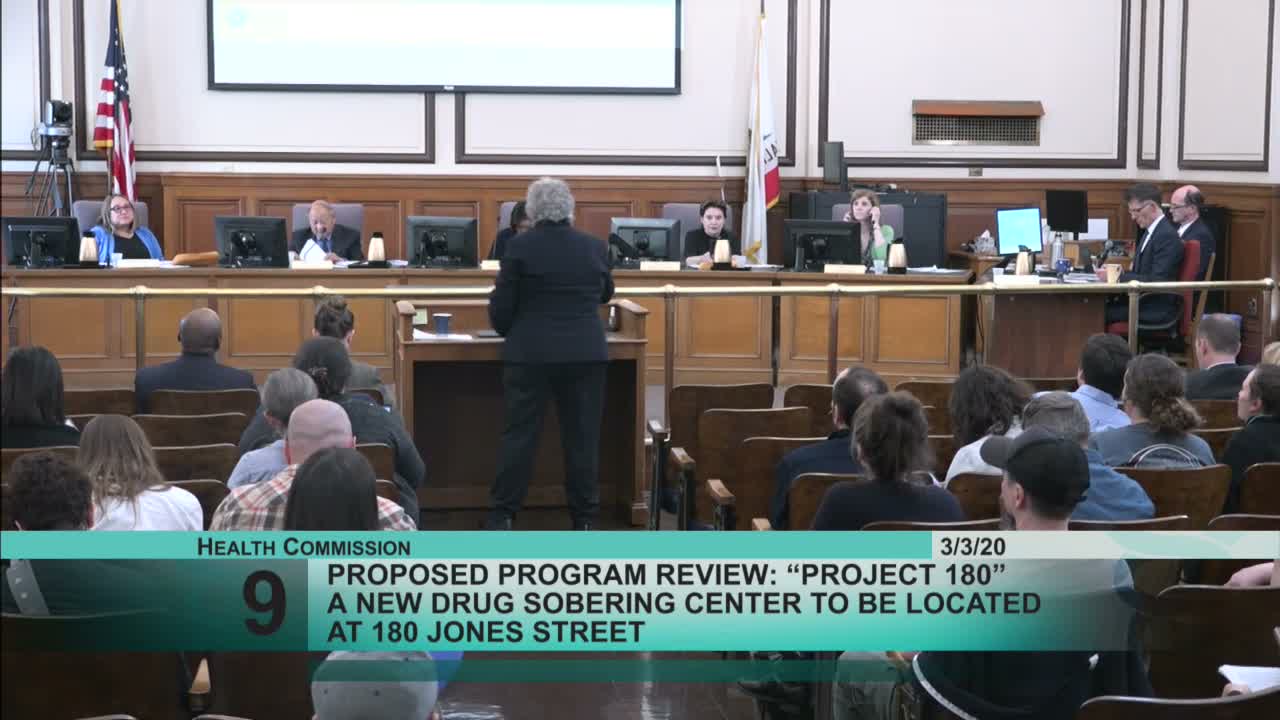
DPH and HealthRight 360 described Project 180, a temporary, trauma-informed, harm-reduction sobering center for people intoxicated on methamphetamine at 180 Jones; the proposal drew strong support from providers and users and strong opposition from nearby residents and unions who criticized site selection, process and cost.
San Francisco Department of Public Health and proposed operator HealthRight 360 presented Project 180, a pilot drug sobering center at 180 Jones Street intended to serve people in the Tenderloin who are intoxicated on methamphetamine and other substances. Medical director Judy Martin said the center responds to the methamphetamine task forces top recommendation and would focus on trauma-informed, harm-reduction care with 24/7 staffing, triage and monitoring and warm handoffs into treatment.
Kathleen Silk, managing director for behavioral health at HealthRight 360, described the program model: voluntary stays, registered nurses on every shift, safety monitors trained in de-escalation, outreach vans to bring people in, and efforts to partner with neighborhood providers. She said the site is temporary (the city owns the lot and it is slated for affordable housing in fall 2021) and that the pilot will be evaluated in partnership with UCSF to measure flow, referrals and outcomes.
Public testimony was extensive and sharply divided. Supporters including Saint Anthony Foundation, San Francisco AIDS Foundation, providers, peer navigators and residents who are unhoused urged rapid implementation to reduce overdoses and provide a humane alternative to arrest. Several speakers described witnessing deaths and severe harms on nearby blocks and said services in the Tenderloin are urgently needed.
Opponents and concerned neighbors criticized the site selection and community process, citing lack of adequate notice, insufficient translation and an inability for residents and schools to participate. Multiple speakers cited a $6.8 million budget figure for the temporary tent and called for additional community meetings, clearer safety and school-protection plans, and more local input before a contract vote. Department leaders acknowledged deficiencies in outreach and committed to scheduling additional fully interpreted community meetings before the March 17 contract consideration.
The commission did not vote on Project 180; commissioners asked for a more detailed safety plan, clearer outreach and reporting commitments, and regular updates if the pilot proceeds. The contract is scheduled for consideration on March 17.