Get Full Government Meeting Transcripts, Videos, & Alerts Forever!
Get email alerts on the Covid19 topic
No spam. Unsubscribe anytime.
San Francisco health officials outline COVID-19 preparedness, begin local testing
Summary
San Francisco public-health leaders told the Health Commission they had started local COVID-19 testing with a 1' day turnaround, stressed protecting vulnerable residents and health workers, and called for anti-stigma messaging after Mayor Breed declared a local emergency.
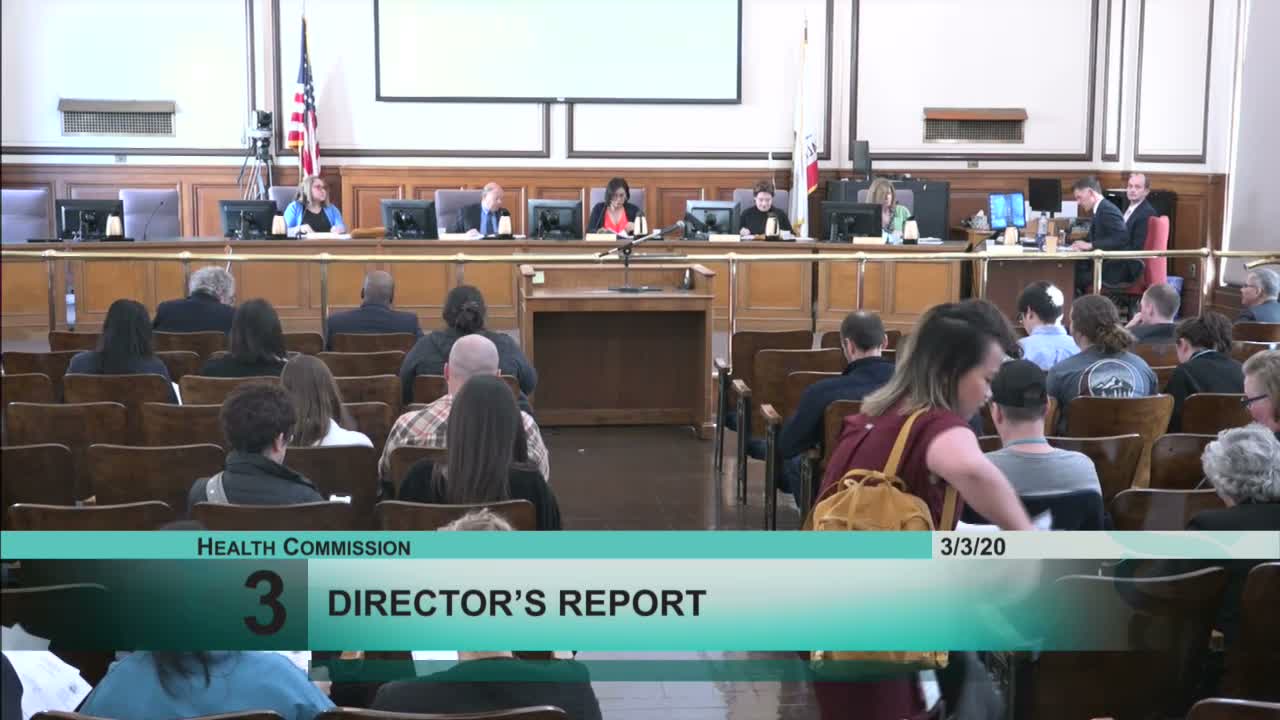
Grant Colfax, director of the San Francisco Department of Public Health, told the Health Commission the city had activated additional resources and staff to prepare for COVID-19 and that Mayor London Breed had "declared a state of emergency in the city, which was transformative in our ability to better prepare for the response." He said the declaration improves coordination with other city departments and makes the city eligible for potential federal resources.
Dr. Tomas Aragon, the citys public-health officer, said the declaration is a local emergency (not a narrower local health emergency) and described three priority areas: protecting medically vulnerable residents, protecting health-care workers and mitigating community spread. He said San Francisco had no newly diagnosed COVID-19 cases at the time of the briefing but that regional counts were rising and that the city had started local testing with a turnaround time of "between 1 and 2 days." Aragon cautioned that existing CDC testing criteria limit initial testing to people at highest risk.
Both officials urged basic personal measures to reduce spread, including frequent handwashing, staying home when ill and avoiding handshakes. Colfax emphasized anti-stigma messaging and said the department is coordinating communications with the Department of Emergency Management to reach diverse communities and will post guidance at sfdph.org. The presentation included a reminder that N95 respirators were being released from the state stockpile for health-care workers and that the city was working with hospitals to plan for potential medical surge.
The commission followed with questions about testing sources and hospital coordination. Aragon said early local testing used CDC kits distributed through the state, and Colfax described regular planning calls among local health systems to identify staffing and surge strategies.
The commission did not take action on policy during the briefing; Colfax and Aragon said they would continue report-backs as the situation evolves.